
UK Proposes Night-Time Social Media Curfew for Teenagers: What It Means and Why It Matters
Introduction
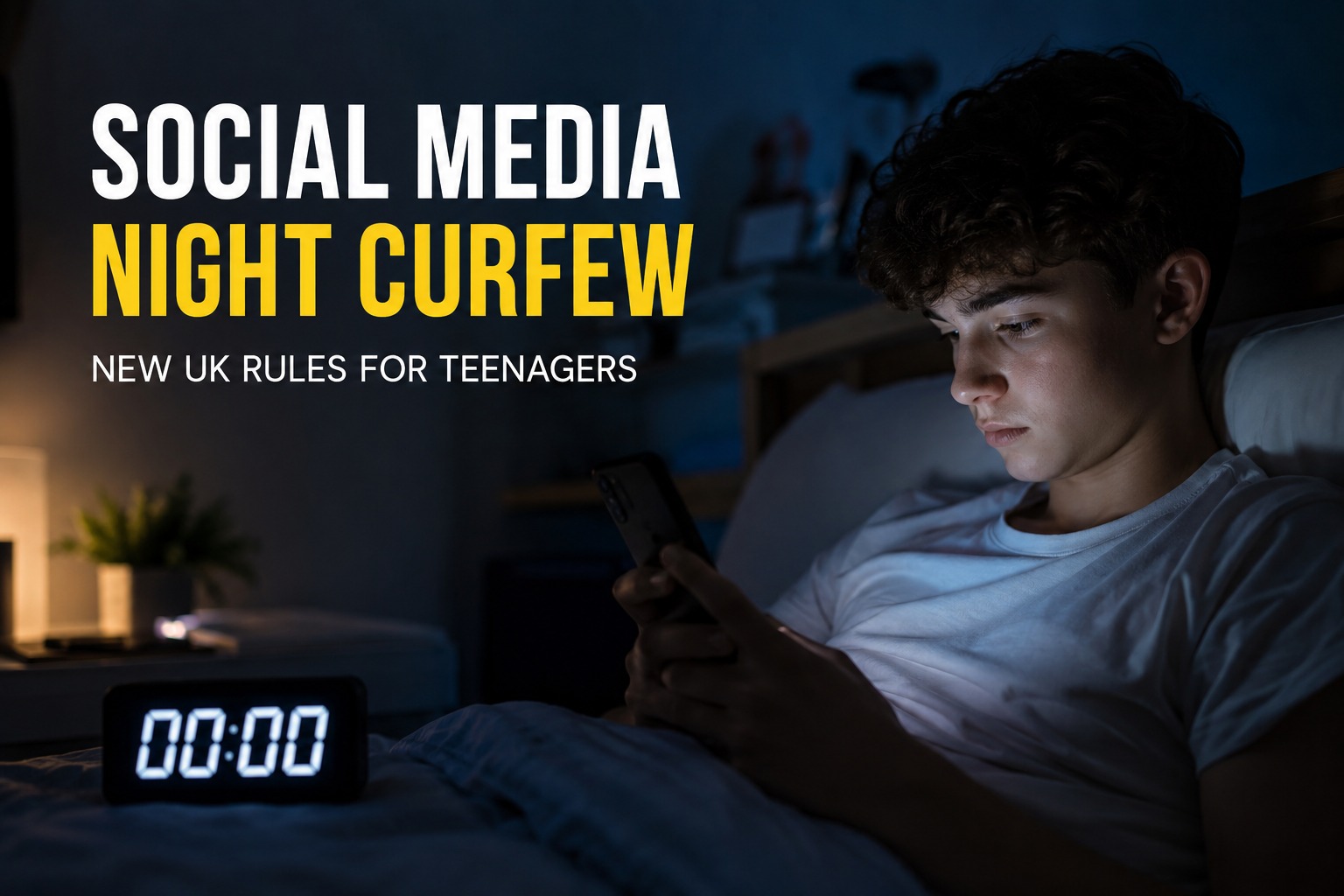
The UK government is considering a major change to how teenagers use social media, aiming to reduce the negative effects of excessive screen time during the night. Under a newly proposed plan, popular platforms such as Instagram, TikTok, and YouTube would automatically restrict access for users aged 16 and 17 between 12:00 a.m. and 6:00 a.m. Although teenagers would have the option to disable the restriction through their account settings, the default limitation is designed to encourage healthier online habits.
The proposal comes amid growing concerns about the impact of social media on young people's mental health, sleep quality, academic performance, and overall well-being. Experts, educators, and parents have increasingly questioned whether endless scrolling and algorithm-driven content are keeping teenagers awake for longer than they should.
If implemented, the policy could mark one of the UK's most significant attempts to create a healthier digital environment for young users while balancing personal choice and online safety.
Why Is the UK Introducing These Measures?
Over the past decade, social media has become deeply integrated into teenagers' daily lives. While these platforms offer opportunities for learning, creativity, and communication, they are also designed to maximize user engagement.
Features such as infinite scrolling, autoplay videos, personalized recommendations, and continuous notifications encourage users to remain online for extended periods. For teenagers, whose brains are still developing, resisting these engagement techniques can be particularly challenging.
Numerous studies have linked excessive late-night social media use with poor sleep quality, increased anxiety, reduced concentration, lower academic performance, and higher levels of emotional stress. Sleep specialists also warn that exposure to bright screens before bedtime can interfere with the body's natural production of melatonin, making it more difficult to fall asleep.
The UK government believes that introducing default overnight restrictions can help teenagers establish healthier bedtime routines without completely removing their freedom to use social media.
How the Proposed Night-Time Restriction Would Work
According to the proposal, social media platforms including Instagram, TikTok, and YouTube would automatically become unavailable for users aged 16 and 17 between midnight and 6 a.m.
Unlike a complete legal ban, the restriction would function as a default safety setting. Teenagers who wish to continue accessing these services during overnight hours would be able to opt out by changing their account settings.
This approach reflects a concept known as "privacy and safety by default," where the safest option is enabled automatically while still allowing users to make informed choices.
The government is also encouraging platforms to make these settings easy for parents to understand while ensuring that teenagers remain aware of the potential health impacts of excessive late-night screen time.
More Than a Curfew: Tackling Addictive Platform Features
The proposed changes extend beyond limiting access during certain hours.
Officials are also targeting platform features that are widely believed to encourage addictive usage patterns. These include:
- Autoplay videos that immediately start playing new content.
- Infinite scrolling that removes natural stopping points.
- Recommendation algorithms that continuously serve personalized content.
These features have become central to modern social media design because they significantly increase user engagement. However, critics argue that they also make it much harder for teenagers to recognize when it is time to stop using their devices.
Reducing or disabling these engagement tools could help young users spend less time online and regain greater control over their digital habits.
Why Sleep Matters for Teenagers
Sleep is one of the most important factors in adolescent development. During the teenage years, the brain undergoes rapid growth that affects learning, memory, emotional regulation, and decision-making.
Health experts generally recommend that teenagers receive between eight and ten hours of sleep each night. Unfortunately, many fail to meet this recommendation because they stay awake browsing social media, watching videos, or chatting with friends.
Late-night phone usage can affect teenagers in several ways:
Poor sleep reduces concentration in school, making it harder to absorb new information. Chronic sleep deprivation also increases irritability, anxiety, and mood swings. Over time, inadequate sleep may contribute to depression, weakened immune function, and lower overall well-being.
By encouraging teenagers to disconnect during sleeping hours, policymakers hope to support healthier daily routines.
Balancing Safety and Personal Freedom
One notable aspect of the proposal is that teenagers will still have the ability to disable the overnight restriction.
Rather than imposing an absolute ban, the government is attempting to create a balanced system that promotes healthier choices while respecting individual autonomy.
Supporters argue that default protections are often effective because many users leave default settings unchanged. Similar approaches have already been used successfully in areas such as online privacy, cybersecurity, and parental controls.
Critics, however, question whether allowing users to opt out will significantly reduce overnight usage, particularly among teenagers who are already highly active on social media.
Parents May Benefit Too
Many parents struggle to manage their children's screen time, particularly during late-night hours.
Arguments over bedtime phone use have become increasingly common in many households. Automatic overnight restrictions could reduce family conflict by shifting responsibility away from parents and toward platform-based safety measures.
Parents may also find it easier to establish consistent bedtime routines if teenagers know that social media apps are unavailable during sleeping hours by default.
However, digital parenting experts continue to emphasize that technology cannot replace healthy family communication. Open discussions about responsible internet use remain essential regardless of any platform restrictions.
Potential Challenges for Social Media Companies
If the proposal moves forward, social media companies could face significant technical and regulatory challenges.
Platforms would need reliable age verification systems capable of identifying users aged 16 and 17 while protecting their privacy.
Age verification has long been a controversial issue because many teenagers create accounts using inaccurate birth dates. Improving verification methods without collecting excessive personal information will require careful planning.
Companies may also need to redesign certain engagement features, which could affect user activity and advertising revenue.
For businesses whose success depends on keeping users engaged for longer periods, limiting overnight usage may represent a significant shift in platform strategy.
Could Other Countries Follow?
Governments around the world are paying increasing attention to children's online safety.
Several countries have already introduced stronger age verification requirements, parental control laws, and restrictions on certain online services for minors.
If the UK's proposal proves successful in improving teenage sleep and well-being, it could influence policymakers in Europe, North America, Australia, and other regions.
Technology regulation is increasingly becoming an international issue, with governments seeking ways to protect young users while preserving innovation and freedom of expression.
What This Means for Teenagers
For many teenagers, the proposal may initially seem restrictive. Social media plays an important role in maintaining friendships, following interests, learning new skills, and expressing creativity.
However, experts emphasize that the goal is not to eliminate social media but to encourage healthier usage patterns.
Even small reductions in late-night screen time can improve sleep quality, mood, productivity, and academic performance. Many teenagers who voluntarily reduce overnight phone use report feeling more energetic and better able to concentrate during the day.
The proposal also encourages young people to become more mindful of their digital habits rather than relying entirely on platform algorithms to decide how long they stay online.
Conclusion
The UK's proposed overnight social media restrictions represent an important step in the ongoing debate about technology, mental health, and digital well-being. By automatically limiting access to social media between midnight and 6 a.m. for users aged 16 and 17, while still allowing them to opt out, the government is attempting to strike a balance between protection and personal choice.
Combined with plans to reduce addictive features such as autoplay and infinite scrolling, the proposal reflects growing recognition that online platforms have a responsibility to support healthier digital habits.
Whether the policy ultimately succeeds will depend on implementation, cooperation from technology companies, and the willingness of teenagers and parents to embrace healthier online routines. Regardless of the outcome, the discussion highlights an increasingly important question facing societies worldwide: how can technology continue to enrich young people's lives without negatively affecting their health, education, and overall well-being?