Apple’s First Foldable iPhone: Early Testers Praise the Design, Hinge and Big-Screen Experience
Apple’s long-rumored entry into the foldable smartphone market is getting closer to reality. The company is widely expected to unveil its first foldable iPhone in September 2026, potentially alongside the iPhone 18 Pro and iPhone 18 Pro Max. Recent reports suggest Apple may market the device as the iPhone Ultra, positioning it as an entirely new premium category rather than simply another iPhone model.
What makes the latest development particularly interesting is that the story is no longer based only on leaked specifications or supply-chain reports. According to Bloomberg’s Mark Gurman, several people who have actually used the device have given positive feedback about important aspects of its design, including how comfortably it fits into a pocket, the feel and durability of its hinge, and the way iOS takes advantage of the larger internal screen.
At the same time, the foldable iPhone may come with compromises—especially in its camera system. Those trade-offs could become significant if Apple launches the device at the rumored price of more than $2,000.
Apple’s Foldable iPhone Could Be a Major Design Shift
Apple has avoided entering the foldable-phone market while companies such as Samsung, Google and Huawei have spent years developing and refining their designs. That cautious approach appears to have been deliberate.
Rather than releasing a foldable iPhone simply because the technology has become popular, Apple seems to be focusing on making the experience feel mature enough to fit its premium product strategy. Reports suggest the company has been working for years on different prototypes before settling on a book-style design.
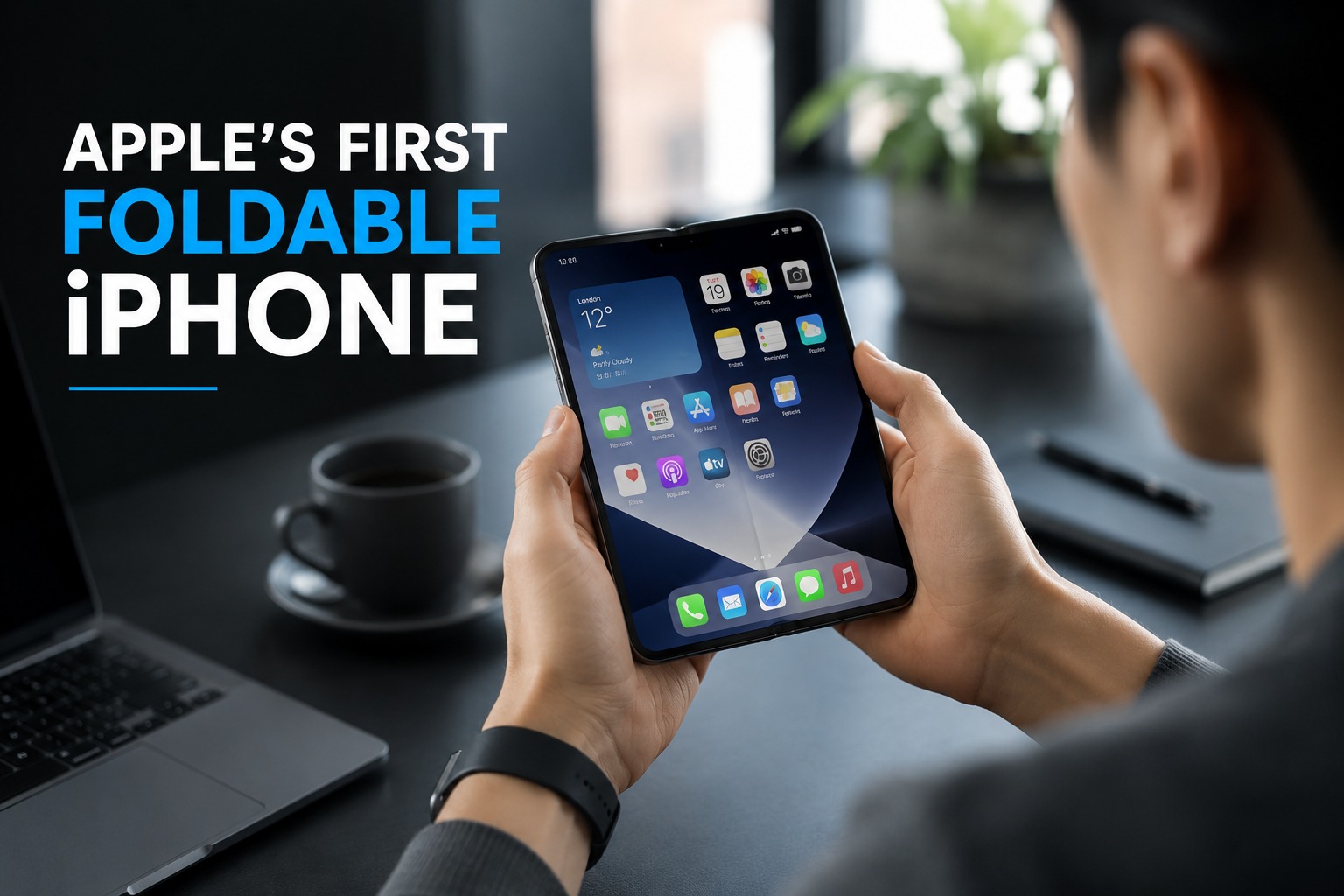
The expected design resembles the general concept used by larger foldable phones: a conventional smartphone-sized outer display that opens like a book to reveal a much larger internal screen.
Current reports point to an outer display of roughly 5.5 inches and an internal display of approximately 7.8 inches. When closed, the device should remain relatively compact, while opening it could provide a tablet-like workspace for productivity, entertainment and gaming.
That combination could make the foldable iPhone attractive to people who want a large screen without carrying both a phone and a tablet.
Early Testers Are Reportedly Impressed by the Hinge
One of the biggest challenges for any foldable phone is the hinge.
The hinge has to perform a difficult balancing act. It needs to be strong enough to survive repeated opening and closing while remaining compact enough not to make the phone thick and uncomfortable. At the same time, its movement affects the display and the visibility of the crease.
According to the latest reports, people who have used Apple’s foldable iPhone have specifically praised the feel and durability of its hinge mechanism. That is potentially important because hinge reliability has been one of the major concerns surrounding foldable smartphones.
Earlier reports have suggested that Apple has explored advanced materials for the hinge, including liquid metal, along with titanium and stainless-steel components. However, these material details remain part of the rumor cycle rather than confirmed Apple specifications.
If Apple has managed to create a hinge that feels solid while keeping the phone thin, it could become one of the device’s most important selling points.
Pocketability Could Be One of Its Biggest Advantages
A large foldable phone can solve one problem while creating another: screen size increases, but portability can suffer.
This is where Apple’s reported design appears to have impressed early users. Gurman says people who have handled the device like how well it fits into a pocket.
That may sound like a small detail, but everyday portability is crucial. A foldable smartphone is only useful if people are comfortable carrying it throughout the day.
Imagine commuting to work with a compact phone in your pocket. Once you sit down to read an email, edit a document, browse a website or watch a video, you could open the device and instantly gain access to a screen approaching 8 inches.
The concept therefore combines two traditionally competing characteristics: smartphone portability and tablet-style screen space.
A Bigger Screen Could Change How iOS Works
The internal display may be more important than the folding mechanism itself.
Apple is reportedly developing new iPad-like app layouts that make better use of the larger internal screen. Rather than simply stretching an iPhone application across a bigger display, the software can potentially show more information at once.
For example, an email application could potentially display a message list alongside the selected email. A productivity application could provide more workspace, while video and gaming applications could take advantage of the additional screen area.
This is where Apple’s software ecosystem could give the foldable iPhone an advantage. A successful foldable device needs more than flexible hardware; developers must also create interfaces that make sense when the screen changes size and orientation.
Apple’s control over both its hardware and operating system could allow it to optimize that transition more tightly than manufacturers that rely on multiple hardware platforms.
The Camera System Could Be the Biggest Compromise
Despite the positive early impressions, the foldable iPhone reportedly will not have every camera feature found on Apple’s most expensive conventional iPhones.
According to reports based on Gurman’s information, the device could use a dual-camera rear system rather than a three-camera Pro-style arrangement. The rumored setup consists of a main camera and an ultra-wide camera, with no dedicated telephoto lens.
That could be a surprising decision for a device expected to cost more than $2,000.
A telephoto camera is particularly useful for portraits, distant subjects and optical zoom. Someone buying Apple’s most expensive iPhone might reasonably expect the most versatile camera system available.
On the other hand, the foldable design creates difficult engineering constraints. Apple reportedly wants to keep the device extremely thin, with some reports suggesting a thickness of around 4.5mm when unfolded. Removing or changing certain components could help the company achieve that goal.
So the missing telephoto camera may represent a deliberate compromise between photography versatility and the physical requirements of a very thin foldable design.
Apple May Bring Back Touch ID
Another major change could involve biometric authentication.
Current reports suggest the foldable iPhone may use Touch ID integrated into the side button instead of Face ID. The reason is believed to be related to space and thickness constraints inside the foldable chassis.
For Apple users accustomed to Face ID, this would be a notable change.
However, Touch ID is not entirely unfamiliar to Apple customers. The company already uses side-mounted Touch ID on some iPad models, so the technology itself is well established.
The decision illustrates an important point about the foldable iPhone: Apple may have to make compromises that would not be necessary in a conventional smartphone.
The Display Could Be One of Apple’s Biggest Achievements
Another long-standing challenge with foldable phones is the visible crease.
Many foldable displays show some form of line or indentation where the screen bends. Apple is reportedly working to make that crease far less noticeable, with rumors suggesting the company has prioritized the issue even at significant engineering cost.
Reports also point to ultra-thin glass and a custom display process intended to reduce thickness while maintaining rigidity and touch performance.
If Apple succeeds in making the crease difficult to see and feel, it could improve the everyday experience considerably. A large screen that looks and behaves more like a conventional flat display would make the foldable format feel less like a compromise.
Still, these details should be treated as expectations rather than confirmed specifications until Apple officially announces the product.
How Much Could Apple’s Foldable iPhone Cost?
Price may ultimately determine whether the foldable iPhone becomes a mainstream product or remains an ultra-premium device.
Multiple reports have placed the expected starting price somewhere around $2,000 to $2,500 in the United States, although Apple has not confirmed pricing.
At that level, the device would be considerably more expensive than a standard iPhone Pro Max.
Apple may therefore be targeting customers who are willing to pay for a completely different form factor rather than trying to replace its conventional iPhone lineup.
The strategy would make sense if Apple views the device as a premium showcase for its engineering and software capabilities. A successful first-generation foldable could also establish a foundation for future models that eventually become thinner, cheaper and more accessible.
When Could the Foldable iPhone Arrive?
Current reporting points to September 2026 as the expected launch period, potentially alongside the iPhone 18 Pro models. A September 9 event has been widely reported as the likely date, although Apple’s final plans should be treated as unconfirmed until officially announced.
Earlier reports had raised concerns about manufacturing and hinge-related problems, but subsequent reporting suggested that Apple had resolved many of the mechanical issues and remained on track for a September debut.
That makes the latest positive tester feedback especially significant. If the product is now being used by people outside the core development process and those users are responding well to its physical design and software, Apple appears to be moving closer to the final stage of its launch process.
What the Foldable iPhone Could Mean for Apple
Apple entering the foldable market would be significant even if the first model sells in relatively small numbers.
The company does not necessarily need millions of people to buy the first-generation device for it to have an impact. A premium foldable could function as a technology showcase, demonstrating how Apple believes flexible displays, advanced hinges and adaptive software should work together.
The more important question may be what happens after the first model.
If consumers respond positively, Apple could gradually improve the design, reduce manufacturing costs and eventually bring foldable technology to a wider range of iPhone models. The first iPhone Ultra could therefore be less about replacing the traditional iPhone and more about establishing the next major direction for the product line.
For consumers, it also creates an interesting choice. Someone who values maximum camera versatility and battery life may still prefer a conventional Pro Max. But someone who wants a pocketable phone that transforms into a much larger screen could find the foldable iPhone far more compelling.
Final Thoughts
Apple’s first foldable iPhone appears to be shaping up as one of the company’s most ambitious new hardware products in years. Early users reportedly like its pocket-friendly design, durable-feeling hinge and software that makes better use of the larger internal display.
But the device is unlikely to be perfect. The rumored absence of a telephoto camera, possible return of Touch ID and extremely high price show the compromises Apple may be making to achieve a thin and practical foldable design.
Ultimately, Apple’s biggest challenge will not simply be making an iPhone that folds. It will be convincing customers that the folding design is worth paying a premium for.
If Apple can combine a reliable hinge, an unobtrusive display crease, intelligent iOS adaptations and genuinely useful tablet-sized functionality, the first foldable iPhone could do more than add another product to Apple’s lineup—it could redefine what users expect from an iPhone.