
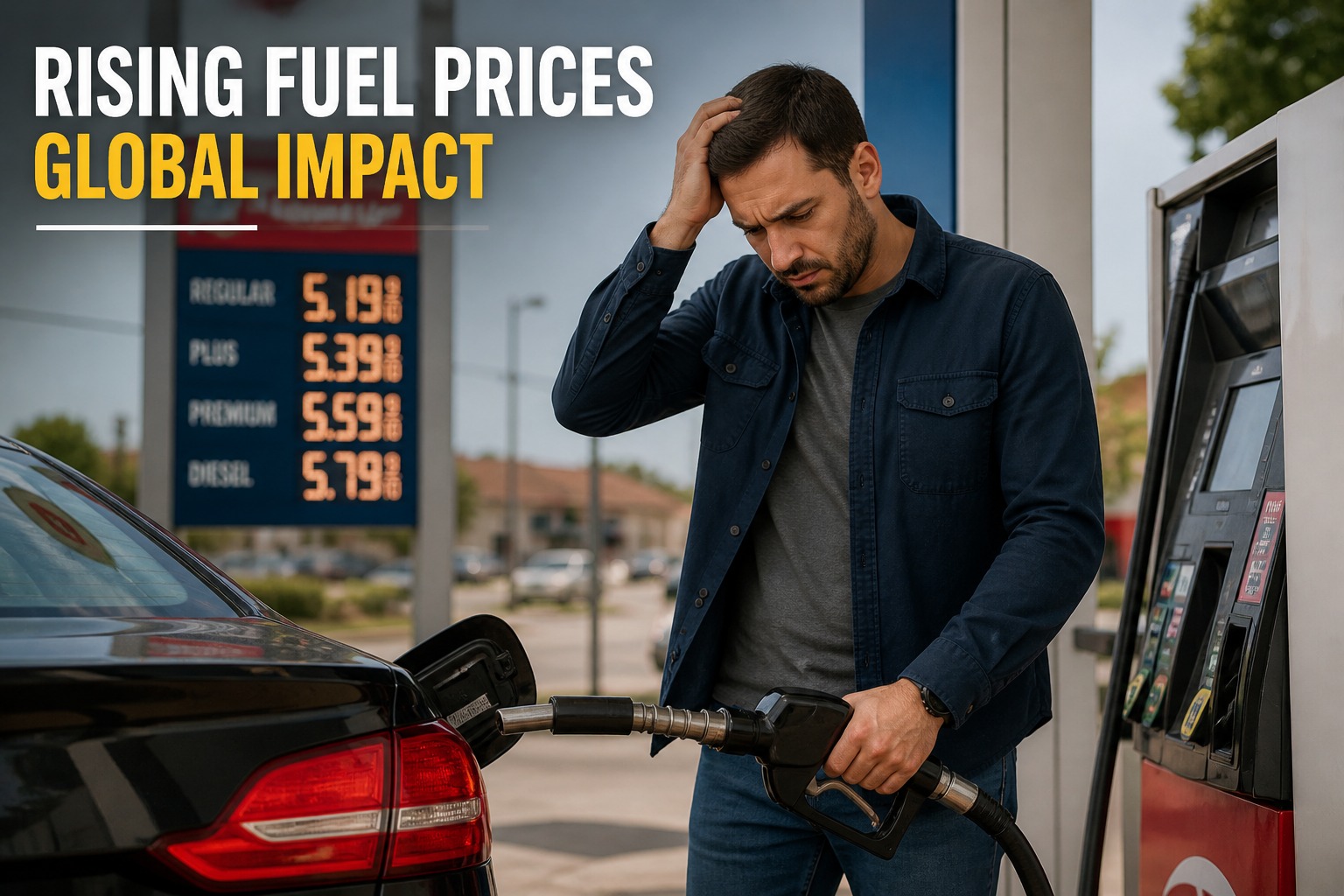
Fuel Prices and the Global Economy: Why Rising Energy Costs Are Shaping Our Everyday Lives
Introduction: The Hidden Force Behind Your Daily Expenses
When fuel prices rise, most people immediately think about the cost of petrol at the pump. But the real story goes much deeper. Fuel is not just something you use to drive your car—it is the backbone of the global economy. From transporting food to powering factories, energy costs quietly influence almost every product and service you rely on.
Today, countries around the world are adjusting fuel tariffs and reshaping energy policies to deal with growing uncertainty. For many households, especially in developing economies, this shift is not just a headline—it’s a daily struggle. Understanding what’s happening and why it matters can help you make better financial decisions and see the bigger picture behind rising costs.
The Real Problem: Why Fuel Prices Are Rising
Fuel prices don’t increase randomly. They are the result of multiple global and local factors interacting at the same time.
At the global level, geopolitical tensions often play a major role. Conflicts or instability in oil-producing regions can disrupt supply, creating panic in international markets. When supply becomes uncertain, prices naturally rise.
Another major factor is production control. Oil-producing countries sometimes deliberately reduce output to keep prices high. This strategy helps their economies but creates pressure for countries that rely heavily on imports.
At the same time, demand continues to grow. As populations increase and economies develop, more energy is needed for transportation, manufacturing, and electricity generation. This growing demand puts additional strain on already limited resources.
Currency fluctuations also matter. Countries that import fuel must pay in stronger currencies like the US dollar. If their local currency weakens, fuel becomes even more expensive—regardless of global prices.
Finally, governments themselves play a role through taxes and tariffs. To manage budgets or control consumption, many governments adjust fuel taxes, which directly affects the final price consumers pay.
How Fuel Prices Affect the Global Economy
Fuel is often described as the “engine” of the economy—and for good reason. When fuel prices rise, the effects spread quickly across multiple sectors.
Transportation is the first to feel the impact. Whether it’s trucks delivering goods, ships carrying cargo, or airplanes transporting passengers, higher fuel costs increase operational expenses. Businesses then pass these costs on to consumers in the form of higher prices.
Manufacturing is another major area affected. Factories depend on energy to run machinery, produce goods, and maintain operations. Rising energy costs increase production expenses, which again leads to higher product prices.
Agriculture also suffers. Farmers rely on fuel for tractors, irrigation systems, and transportation. When fuel becomes expensive, the cost of growing and distributing food rises—leading to higher grocery bills.
Even services are not immune. Delivery apps, public transport, and logistics companies all adjust their pricing when fuel costs increase.
In simple terms, fuel price increases create a chain reaction. One change at the energy level spreads throughout the entire economy.
The Direct Impact on Everyday Life
For most people, the most noticeable effect of rising fuel prices is inflation—the general increase in prices of goods and services.
When fuel prices rise, everything becomes more expensive. Food, clothing, transportation, electricity, and even school fees can be indirectly affected. This reduces purchasing power, meaning people can afford less with the same income.
In countries like Pakistan, where many households already operate on tight budgets, this impact is even more severe. Families may need to cut back on essential spending, delay purchases, or reduce savings.
Transportation costs also rise significantly. Daily commuting becomes more expensive, especially for those who rely on private vehicles or public transport. This can affect job opportunities, education access, and overall quality of life.
Small businesses are particularly vulnerable. Shop owners, delivery services, and local manufacturers often struggle to absorb higher fuel costs. Many are forced to increase prices, reduce staff, or even shut down.
Why Governments Are Changing Fuel Policies
To manage these challenges, governments around the world are adjusting fuel tariffs and energy policies. These decisions are often complex and sometimes controversial.
One common approach is reducing fuel subsidies. While subsidies can make fuel cheaper for consumers, they place a heavy burden on government budgets. Removing or reducing them helps governments save money but increases prices for the public.
Some governments are also increasing fuel taxes to generate revenue. This money is often used for infrastructure, social programs, or reducing national debt. However, higher taxes can further increase the cost burden on citizens.
Another strategy is diversifying energy sources. Many countries are investing in renewable energy like solar, wind, and hydro power. The goal is to reduce dependence on imported fuel and create a more stable energy system.
In the long term, these policy changes aim to create a more sustainable and resilient economy. But in the short term, they often lead to higher costs for consumers.
Real-World Example: How One Price Increase Spreads Everywhere
Imagine a simple scenario. Fuel prices increase by 10%.
A transportation company now spends more on fuel, so it increases delivery charges. A grocery store receiving those deliveries now pays more and raises food prices. A restaurant buying those groceries also increases menu prices. Customers then pay more for meals, even though the original issue was fuel.
This ripple effect shows how deeply fuel prices are connected to everyday life. It’s not just about petrol—it’s about the entire economic system.
The Role of Global Energy Uncertainty
One of the biggest challenges today is uncertainty. Unlike the past, where energy markets were relatively stable, today’s environment is unpredictable.
Geopolitical tensions, climate policies, technological changes, and shifting alliances all contribute to uncertainty. This makes it difficult for governments and businesses to plan long-term strategies.
For example, a sudden conflict can disrupt oil supply overnight. A new environmental policy can reduce fossil fuel production. A breakthrough in renewable energy can change market dynamics.
This uncertainty leads to volatility—frequent ups and downs in fuel prices—which makes it even harder for consumers and businesses to adapt.
How Individuals Can Adapt to Rising Fuel Costs
While global energy trends are beyond individual control, there are practical ways people can reduce the impact on their daily lives.
One effective approach is reducing fuel consumption. Using public transport, carpooling, or walking short distances can significantly lower expenses.
Energy efficiency at home also matters. Using energy-saving appliances, reducing electricity waste, and switching to alternative energy sources (like solar panels where possible) can help cut costs.
Budgeting becomes more important during periods of rising fuel prices. Tracking expenses and prioritizing essential spending can help maintain financial stability.
Small lifestyle changes, when combined, can make a noticeable difference over time.
The Future of Fuel and Energy
The current situation is pushing the world toward a major energy transition. Governments and businesses are increasingly focusing on renewable energy and sustainable solutions.
Electric vehicles are becoming more popular as an alternative to fuel-based transport. Solar and wind energy projects are expanding rapidly. Innovations in battery storage and energy efficiency are also gaining attention.
However, this transition will take time. Fossil fuels still dominate the global energy mix, and sudden changes are not practical for most economies.
In the coming years, we are likely to see a mix of traditional and renewable energy sources. The goal is to create a balance that ensures both affordability and sustainability.
Conclusion: More Than Just Fuel Prices
Fuel prices are not just numbers on a petrol pump—they are a powerful force shaping the global economy and everyday life.
From the cost of food to the price of transportation, energy influences everything. As governments adjust policies and global uncertainty continues, these impacts are likely to remain a key challenge.
Understanding the “why” behind rising fuel prices helps you see beyond the surface. It allows you to make smarter financial choices and prepare for future changes.
In a world where energy drives progress, staying informed is not just useful—it’s essential.