
Chinese Scientists Develop Eco-Friendly Coal Battery That Could Transform Clean Energy
🌍 Could this breakthrough change the future of coal-powered electricity forever?
By Admin
For decades, coal has been viewed as one of the biggest enemies of the environment. It powers industries, cities, and economies, but it also produces massive carbon emissions that contribute heavily to climate change and air pollution. Governments around the world have spent years trying to reduce dependence on coal while searching for cleaner alternatives.
Now, a team of Chinese scientists may have introduced a breakthrough that could completely change how the world looks at coal-based energy.
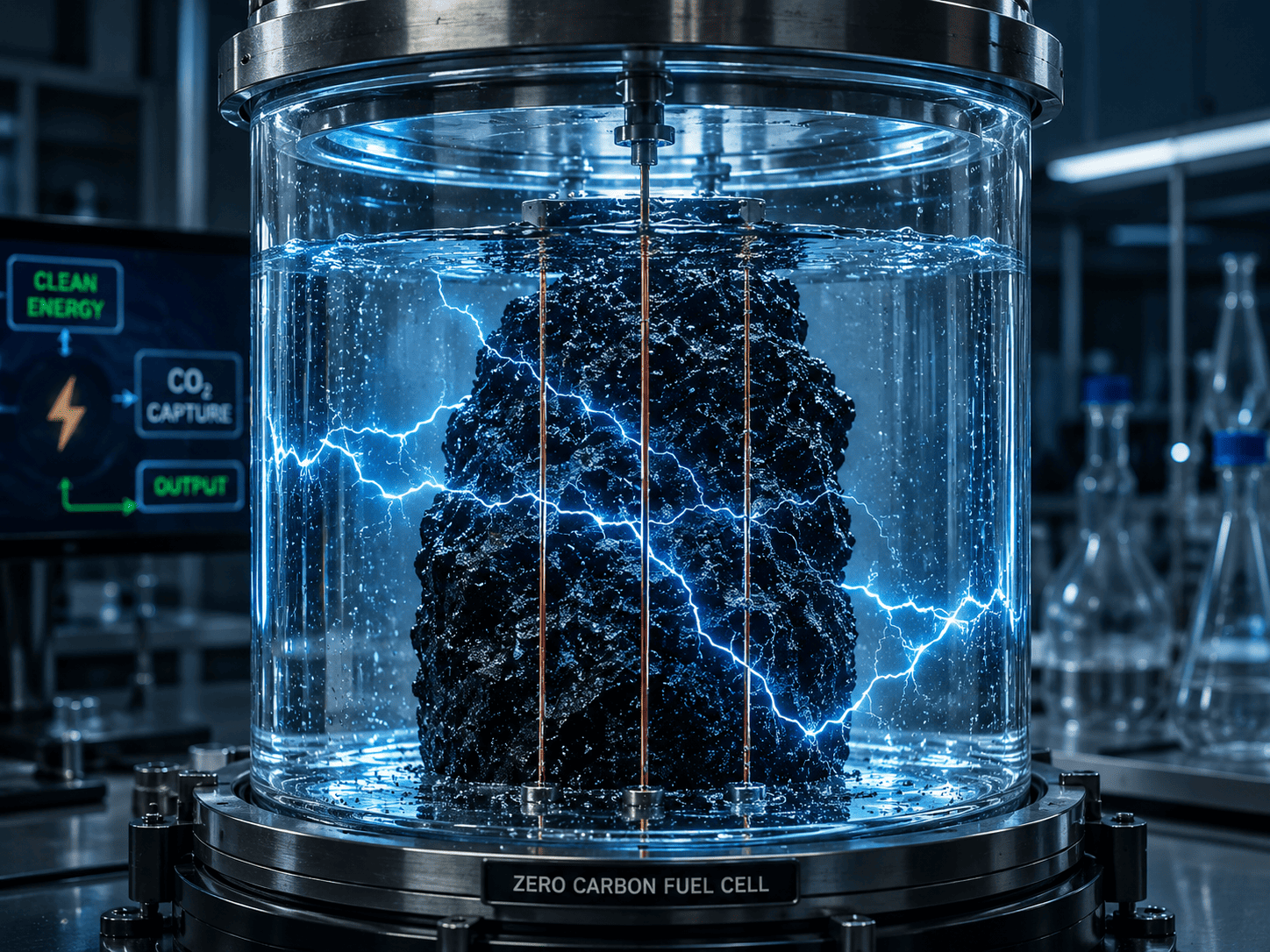
💡 Quick Insight: Researchers at Shenzhen University have developed a new technology known as the Zero-Carbon Emission Coal Fuel Cell (ZC-DCFC) — an advanced system capable of generating electricity from coal while dramatically reducing carbon dioxide emissions. Unlike traditional coal plants that burn fuel directly, this system uses an electrochemical process that captures emissions before they enter the atmosphere.
The development has attracted global attention because it offers something that once seemed almost impossible: cleaner coal energy.
While renewable energy sources such as solar and wind continue to grow rapidly, many countries still rely heavily on coal to meet their energy demands. This new technology could serve as a transitional solution, helping countries reduce pollution without immediately abandoning existing coal resources.
⚠️ Why Traditional Coal Power Is a Major Problem
To understand why this breakthrough matters, it is important to first understand the problem with conventional coal power plants.
Traditional thermal power stations generate electricity by burning coal at extremely high temperatures. The heat converts water into steam, which drives turbines to produce electricity. Although the process has powered economies for more than a century, it comes with serious environmental costs.
Coal combustion releases large amounts of carbon dioxide (CO2), sulfur dioxide, nitrogen oxides, and fine particulate matter into the atmosphere. These pollutants contribute to global warming, acid rain, respiratory diseases, and severe air pollution.
Many cities around the world have struggled with smog and declining air quality because of heavy coal usage. Even modern coal plants equipped with advanced filtration systems still produce significant greenhouse gas emissions.
This creates a difficult challenge.
On one hand, the world wants cleaner energy. On the other hand, many developing countries still depend on coal because it remains affordable, accessible, and capable of providing stable electricity around the clock.
Renewable energy is growing, but solar and wind systems also face challenges related to energy storage, weather dependency, and infrastructure costs. That is why scientists continue searching for technologies that can make existing energy systems cleaner while the global transition to renewable power continues.
🔋 What Is the Zero-Carbon Emission Coal Fuel Cell?
The Zero-Carbon Emission Coal Fuel Cell, or ZC-DCFC, is not a traditional battery in the common sense. It is a highly advanced fuel cell system that converts chemical energy from coal directly into electricity through an electrochemical reaction.
This is a very different approach from simply burning coal.
Instead of combustion, the system relies on controlled electrochemical oxidation. This process allows the fuel cell to generate electricity more efficiently while preventing most harmful emissions from escaping into the environment.
According to researchers, the system can achieve energy conversion efficiency of nearly 40 percent, which is considered highly promising for coal-based energy technology.
More importantly, the carbon dioxide generated during the process can be captured within the system itself instead of being released into the atmosphere.
That single feature could represent a major shift in the future of thermal power generation.
⚙️ How the Technology Actually Works
The science behind the system may sound complex, but the overall process can be understood quite clearly.
🔬 Step-by-Step Process
First, the coal undergoes a special pre-treatment stage. Instead of feeding raw coal directly into a combustion chamber, researchers grind the coal into very fine particles and dry it carefully.
The prepared coal is then inserted into the anode chamber of the fuel cell.
On the opposite side, oxygen is supplied to the cathode chamber. Between these chambers sits a special oxide membrane that enables electrochemical reactions to occur.
As the coal reacts within the system, electrons are released and flow through an external circuit, generating electricity.
Because the process is electrochemical rather than combustion-based, it avoids many of the pollutants normally produced during traditional coal burning.
The carbon dioxide that forms during the reaction is captured inside the system instead of escaping into the atmosphere.
Researchers say the captured CO2 can even be converted into useful industrial chemicals such as syngas.
Syngas, short for synthesis gas, is widely used in the chemical industry to produce fuels, fertilizers, hydrogen, and other valuable products.
This means the system not only reduces emissions but may also create additional economic value from captured carbon.
♻️ Instead of releasing harmful CO2 into the atmosphere, the system captures and repurposes it into useful industrial chemicals.
🌎 Why This Innovation Matters Globally
The timing of this breakthrough is especially important.
Over the last decade, governments and industries worldwide have faced increasing pressure to reduce greenhouse gas emissions following global climate agreements such as the Paris Agreement.
Countries are now setting ambitious carbon neutrality goals, investing billions into renewable energy infrastructure, electric vehicles, hydrogen technology, and carbon capture systems.
However, the reality is that coal remains deeply embedded in the global energy system.
Countries such as China, India, Indonesia, and several African nations continue relying heavily on coal because it provides affordable and stable electricity for rapidly growing populations.
Completely eliminating coal overnight is not realistic for many economies.
This is why cleaner coal technologies remain an important area of research.
If systems like ZC-DCFC become commercially viable, they could help reduce emissions significantly while allowing countries to transition more gradually toward fully renewable energy systems.
In other words, this technology could serve as a bridge between the fossil fuel era and the clean energy future.
⚡ The Difference Between Burning Coal and Using a Fuel Cell
Many people assume all coal-based energy systems work the same way, but there is a major difference between combustion and fuel-cell technology.
Traditional coal plants burn fuel directly. This creates heat, smoke, ash, and uncontrolled emissions.
Fuel cells work differently.
A fuel cell converts chemical energy into electricity through controlled reactions rather than open combustion. This method can achieve higher efficiency and lower pollution.
Think of it like the difference between burning wood in an open fire versus using a highly controlled energy conversion system.
Because the process is more precise, scientists can better manage emissions and energy losses.
This is one reason why fuel cells are already widely used in hydrogen energy systems and electric vehicles.
Applying similar principles to coal is what makes this Chinese innovation especially interesting.
☀️ Can This Technology Replace Renewable Energy?
Probably not.
At least not entirely.
Renewable energy sources like solar, wind, hydroelectric, and geothermal power remain essential for achieving long-term sustainability.
However, technologies like the Zero-Carbon Emission Coal Fuel Cell may complement renewables during the global energy transition.
One of the biggest challenges with renewable energy is intermittency.
Solar panels generate electricity only during sunlight hours. Wind turbines depend on weather conditions. Large-scale energy storage systems are still expensive and developing.
Coal, despite its environmental drawbacks, provides consistent baseline power.
A cleaner coal fuel-cell system could potentially help stabilize electricity grids while renewable infrastructure continues expanding.
This makes the technology especially valuable for industrial economies that cannot afford energy shortages or unstable power supply.
🚧 Challenges the Technology Still Faces
Although the innovation is promising, several important challenges remain before it can be adopted commercially.
First, large-scale deployment would require extensive testing.
Laboratory success does not automatically guarantee industrial success. Scientists still need to determine how efficiently the system performs over long periods under real-world conditions.
Second, cost will be a major factor.
Advanced fuel-cell systems often require expensive materials, specialized membranes, and highly controlled operating environments.
If the technology becomes too costly, power companies may hesitate to adopt it despite the environmental benefits.
Third, infrastructure integration could be complicated.
Existing coal power plants are designed around combustion systems, not electrochemical fuel cells. Retrofitting older plants or building entirely new facilities would require major investment.
Finally, global energy policy continues shifting toward fully renewable systems.
Some environmental groups may argue that investment should focus entirely on solar, wind, and battery storage rather than improving coal technology.
These debates will likely continue as governments evaluate the best path toward carbon neutrality.
🔮 What This Means for the Future of Energy
Even with the challenges, the development represents an important step in clean-energy innovation.
Historically, energy transitions do not happen instantly.
The world moved gradually from wood to coal, from coal to oil and gas, and now toward renewable energy.
During these transitions, hybrid technologies often play a critical role.
The Zero-Carbon Emission Coal Fuel Cell could become one of those transitional technologies.
It may help reduce emissions from existing energy systems while countries continue investing in renewable infrastructure.
It also highlights an important reality about modern climate science: solving environmental problems often requires multiple solutions working together.
There is unlikely to be one single technology that fixes everything.
Instead, progress will probably come through a combination of renewable energy, carbon capture, advanced batteries, hydrogen systems, nuclear innovation, and cleaner industrial processes.
This Chinese coal fuel-cell project adds another important possibility to that growing list.
🏭 Real-World Impact If Successfully Commercialized
If the technology reaches large-scale commercial use, the impact could be enormous.
Coal-producing countries could significantly lower emissions without immediately shutting down existing industries.
Industrial sectors that require continuous power could benefit from more stable clean-energy alternatives.
Carbon capture and chemical conversion could also create entirely new economic opportunities.
For example, captured carbon dioxide transformed into syngas may support chemical manufacturing, synthetic fuel production, and hydrogen-related industries.
In regions heavily dependent on coal mining, cleaner coal technologies may also help protect jobs while environmental regulations become stricter.
That balance between economic stability and environmental responsibility is one of the biggest energy challenges facing governments today.
✅ Conclusion
The development of the Zero-Carbon Emission Coal Fuel Cell by Chinese scientists represents a fascinating advancement in energy technology.
Rather than simply burning coal and releasing harmful emissions into the atmosphere, the system uses electrochemical reactions to generate electricity more efficiently while capturing carbon dioxide inside the process.
Although the technology is still in its early stages, it has the potential to reshape how the world thinks about coal-based energy.
It is not a perfect solution, nor is it likely to replace renewable energy entirely. However, it could become an important transitional technology that helps reduce emissions while the world continues moving toward a cleaner energy future.
As countries struggle to balance economic growth, energy demand, and climate responsibility, innovations like this show that science continues searching for smarter and more sustainable ways to power the modern world.