
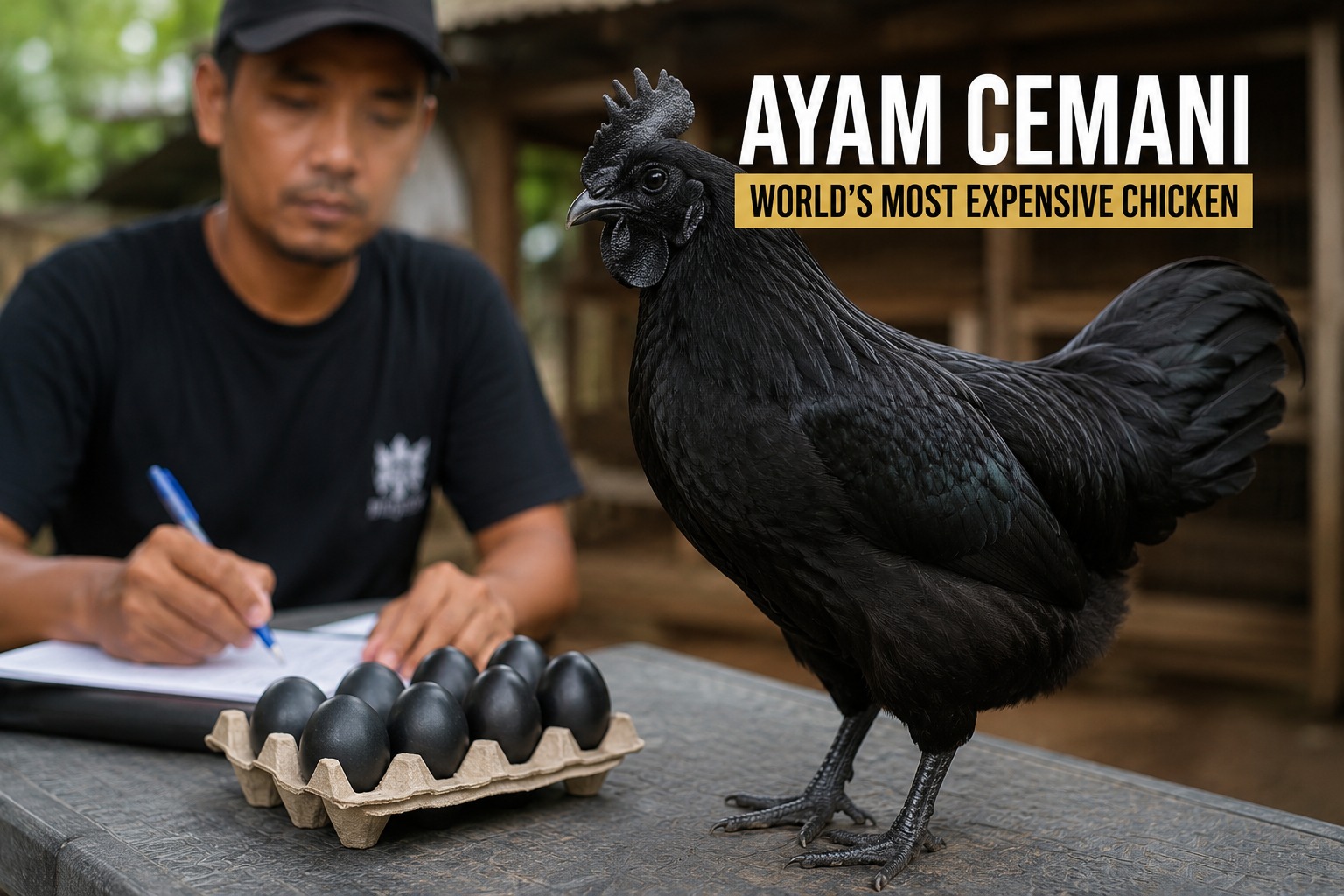
Ayam Cemani: The World’s Most Expensive Black Chicken Worth Millions
Ayam Cemani: The World’s Most Expensive Black Chicken Worth Millions
Imagine buying a chicken for the price of a luxury motorcycle. It sounds unbelievable, yet this is the reality of the rare Indonesian chicken known as the Ayam Cemani. Often called the “Lamborghini of poultry,” this mysterious all-black bird has fascinated breeders, collectors, and animal lovers across the world. From its feathers to its skin, bones, and internal organs, nearly every part of this chicken appears black, making it one of the most unique animals on Earth.
What makes the Ayam Cemani even more shocking is its price. In some countries, a single purebred bird can cost thousands of dollars, while fertile eggs are sold at premium rates. In Pakistan and many other regions, reports of these chickens being sold for over 1.7 million rupees have sparked curiosity online. But why is this chicken so expensive? Is it simply because of its color, or is there a deeper story behind its popularity and value?
The answer lies in a combination of genetics, rarity, cultural beliefs, and global demand.
The Origins of Ayam Cemani
The Ayam Cemani originates from Indonesia, particularly from the island of Java. The word “Ayam” means chicken in Indonesian, while “Cemani” refers to a village in Central Java where the breed became famous.
For centuries, local communities considered this bird spiritually significant. In Indonesian folklore, the chicken was believed to possess mystical powers and was often used in traditional ceremonies and rituals. Some people thought the bird brought luck, prosperity, or protection against evil spirits.
While modern science may not support these supernatural claims, the cultural value of the Ayam Cemani helped increase its reputation and desirability. Over time, breeders from Europe, the United States, and Asia began importing these birds, turning them into a luxury poultry breed.
Why Is the Chicken Completely Black?
The most striking feature of the Ayam Cemani is its deep black appearance. Unlike ordinary black chickens, this breed experiences a rare genetic condition called fibromelanosis.
Fibromelanosis causes excessive melanin production in the body. Melanin is the pigment responsible for dark colors in skin, hair, and feathers. In Ayam Cemani chickens, the melanin spreads far beyond normal levels, affecting not only the feathers but also:
- Skin
- Beak
- Legs
- Muscles
- Bones
- Internal organs
Even the tongue can appear dark gray or blackish.
This unusual mutation is extremely rare in the animal world. Scientists believe the condition is caused by a genetic duplication that triggers uncontrolled pigment distribution throughout the chicken’s body.
Interestingly, despite common myths online, the chicken does not lay completely black eggs. The eggs are usually cream-colored or slightly tinted. However, because the breed itself is rare, the eggs are still sold at very high prices.
Why Is Ayam Cemani So Expensive?
Many factors contribute to the extraordinary price of this chicken.
Rare Genetics
The biggest reason is rarity. Purebred Ayam Cemani chickens are difficult to breed correctly. Not every chick develops the intense black characteristics that buyers expect. Breeders must carefully maintain bloodlines, which increases the cost of production.
Additionally, importing these birds into other countries involves transportation costs, legal permits, and specialized breeding programs. All these factors raise the market price significantly.
High Global Demand
Luxury and exotic animals have become increasingly popular worldwide. Collectors often seek rare breeds to display in farms, exhibitions, or private collections. The Ayam Cemani perfectly fits this market because of its dramatic appearance and mysterious reputation.
Social media has also played a huge role. Viral videos and photos showing completely black chickens have created massive curiosity among people who had never seen such a bird before. As demand grows faster than supply, prices naturally rise.
Cultural and Spiritual Beliefs
In some regions, the chicken is still associated with traditional rituals and spiritual practices. Certain communities believe the bird symbolizes power, luck, or protection. These beliefs further increase its perceived value.
Breeding Challenges
Ayam Cemani chickens require careful breeding management. Fertility rates can vary, and maintaining the purity of the breed takes time and expertise. Since genuine birds are limited, breeders often charge premium prices for both adult chickens and fertilized eggs.
The Truth About the “17 Lakh Chicken”
News headlines often claim that a single Ayam Cemani chicken costs around 17 lakh Pakistani rupees. While such prices may sound exaggerated, they are not entirely impossible in rare cases.
The value depends on several factors:
- Purity of the bloodline
- Age and health of the bird
- Breeding capability
- International demand
- Import status
- Availability in local markets
In many cases, extremely high prices are linked to elite breeding pairs or imported specimens rather than ordinary birds. Some online claims are also exaggerated for publicity, but there is no doubt that Ayam Cemani remains among the most expensive chicken breeds in the world.
Even fertile eggs can cost hundreds of dollars internationally because buyers hope to hatch purebred chicks.
Is the Meat Different From Normal Chicken?
One of the biggest curiosities surrounding Ayam Cemani is whether its meat tastes different.
Surprisingly, the flavor is fairly similar to traditional chicken, although some people describe it as slightly richer or gamier. The black color mainly affects appearance rather than taste.
In Indonesia, the chicken is sometimes used in special traditional dishes or ceremonial meals. However, due to its high value, most owners prefer breeding or displaying the birds rather than eating them.
This creates an interesting contradiction: a chicken famous worldwide for its appearance is rarely consumed as food.
The Role of Social Media and Internet Hype
The internet transformed Ayam Cemani from a local Indonesian breed into a global sensation.
When photos of completely black chickens first appeared online, many users assumed the images were edited or fake. The bird looked almost unreal. As videos and documentaries spread across platforms like YouTube, Facebook, Instagram, and TikTok, public fascination exploded.
Exotic animal influencers and breeders began showcasing the birds as symbols of rarity and luxury. This online attention significantly boosted prices and demand.
Today, owning an Ayam Cemani is sometimes seen as a status symbol among exotic poultry enthusiasts.
Challenges of Raising Ayam Cemani
Although the breed looks extraordinary, raising these chickens is not easy.
They require proper nutrition, clean living conditions, and experienced handling. Since they are rare and expensive, disease prevention becomes extremely important. A small health issue can result in major financial loss for breeders.
Another challenge is fake breeding claims. Due to high prices, some sellers market ordinary black chickens as Ayam Cemani. Genuine birds have very specific genetic traits, and inexperienced buyers can easily be misled.
This is why serious collectors often purchase from certified breeders with verified bloodlines.
Are Ayam Cemani Chickens Good for Farming?
From a commercial meat or egg farming perspective, Ayam Cemani chickens are not very practical.
They do not produce eggs at the same rate as specialized laying hens, nor do they grow as rapidly as commercial meat breeds. Their primary value comes from rarity and breeding potential rather than agricultural efficiency.
However, for niche breeders and exotic poultry businesses, they can be highly profitable. A successful breeding pair may generate substantial income through chick and egg sales.
In this way, Ayam Cemani operates more like a luxury collectible than an ordinary farm animal.
The Psychology Behind Exotic Animal Obsession
The popularity of Ayam Cemani also reflects a broader human fascination with rare and unusual creatures.
People are naturally attracted to things that seem mysterious or visually unique. Whether it is albino animals, rare reptiles, or black chickens, rarity creates emotional and financial value.
Luxury markets often function on exclusivity. The fewer people who can own something, the more desirable it becomes. The Ayam Cemani perfectly represents this principle.
Its dramatic appearance, limited availability, and viral internet fame combine to create an animal that feels almost mythical.
Conclusion
The Ayam Cemani is far more than just a black chicken. It is a remarkable example of how genetics, culture, rarity, and internet fascination can transform an ordinary farm animal into a global luxury symbol.
Its unusual fibromelanosis mutation gives it a hauntingly beautiful appearance unlike any other poultry breed. Combined with Indonesian cultural history and growing international demand, the chicken has earned a reputation as one of the world’s most expensive birds.
While headlines about million-rupee chickens may sound unbelievable at first, the story behind the Ayam Cemani explains why collectors are willing to pay extraordinary prices. For some people, it is not simply a chicken — it is a rare living masterpiece.
In a world where uniqueness often defines value, the Ayam Cemani stands as proof that even a humble chicken can become a global sensation