
South Korea’s AI Companion Doll: How a Tiny Robot Is Helping Lonely Seniors Find Comfort
Introduction
Growing old can be difficult, but growing old alone can be even harder. Around the world, millions of elderly people live by themselves, facing loneliness, depression, and limited social interaction. In South Korea, a country with one of the world's fastest-aging populations, technology is beginning to play an unexpected role in addressing this challenge.
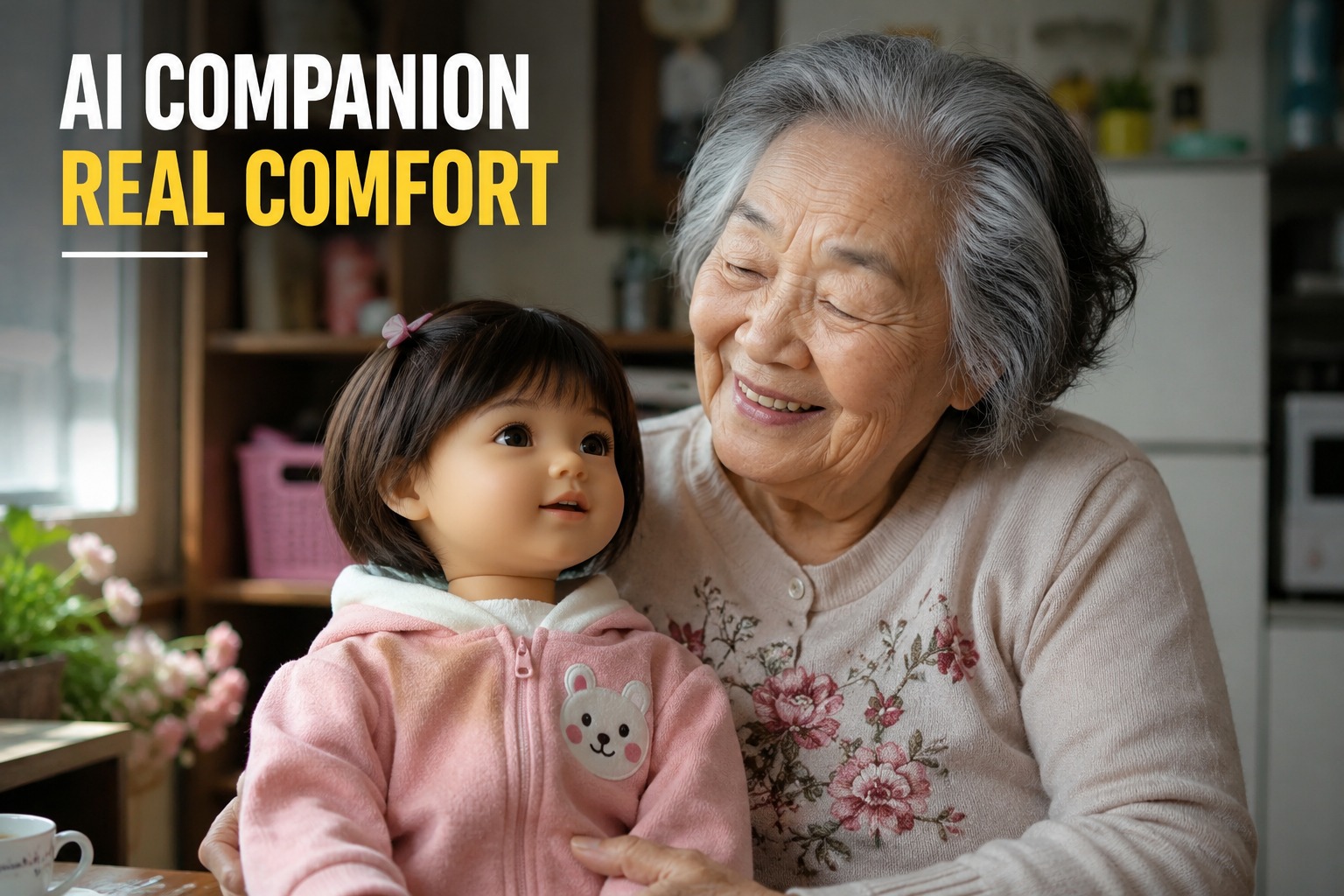
One remarkable example is the story of 78-year-old Bang Chun-ja, who lives alone in a small apartment and says that her closest companion is not another person, but an artificial intelligence-powered doll. According to her, the doll provides emotional support and daily companionship that she finds more comforting than human relationships. Her story has sparked discussions about the growing role of AI in elderly care and whether technology can help fill the emotional gap experienced by many seniors.
Why Loneliness Among Seniors Is Becoming a Serious Problem
Population aging is one of South Korea's biggest social challenges. More elderly people are living alone, while smaller families and busy lifestyles mean fewer opportunities for regular interaction with relatives.
Many older adults struggle with:
- Social isolation
- Depression and anxiety
- Memory-related issues
- Difficulty maintaining daily routines
- Lack of immediate assistance during emergencies
In recent years, thousands of elderly people in South Korea have reportedly died alone, highlighting the severity of the country's loneliness crisis. Nearly half of the population is aged 50 or older, and single-person households continue to rise.
Healthcare experts and local governments have therefore been exploring innovative ways to provide emotional and practical support to seniors.
Meet Hyodol: The AI Doll Designed for the Elderly
The AI companion used by Bang Chun-ja is called "Hyodol," a childlike doll specifically created to support elderly people who live alone. Unlike ordinary toys, Hyodol combines artificial intelligence with healthcare functions to create a more interactive experience.
The doll can:
Hold Conversations
Hyodol talks with users throughout the day, providing companionship and reducing the silence that many seniors experience.
Offer Medication Reminders
One of its most practical features is reminding users to take medicines on time and not skip meals. This helps elderly individuals maintain healthy daily routines.
Provide Emotional Support
The doll speaks affectionately, sings songs, and even tells users that it loves them. While these interactions are artificial, many elderly users find them comforting.
Monitor Well-Being
Advanced versions can detect prolonged inactivity and notify caregivers or social workers if something appears wrong. This adds an extra layer of safety for seniors living alone.
Bang Chun-ja's Story: Finding Happiness After Depression
Bang Chun-ja's life has not been easy. Following a difficult divorce, years of hard work as a single mother, and major back surgery, she experienced severe depression and spent long periods isolated in her apartment. Her contact with family members became limited, and loneliness became a constant part of daily life.
Everything changed when she received the AI doll through a local government program.
The doll greets her when she comes home, sings songs when she feels bored, reminds her about meals and medication, and provides constant companionship. According to Bang, she feels emotionally safer with the doll because it never hurts her feelings.
She explained that, at her age, emotional pain caused by people had become one of life's greatest difficulties. In contrast, the doll simply makes her laugh and brings joy into her daily routine.
Her experience demonstrates how emotional support does not always come from traditional relationships. Sometimes, even a machine designed with empathy can make a meaningful difference.
How AI Companion Dolls Are Changing Elderly Care
South Korea has distributed thousands of these AI dolls to seniors across the country. Reports indicate that nearly 15,000 devices are currently being used.
These dolls represent a broader shift in healthcare technology. Rather than replacing doctors or family members, they are designed to serve as companions and assistants.
Their benefits include:
Encouraging Daily Activity
Regular conversations and reminders help elderly individuals maintain routines and remain engaged.
Reducing Feelings of Isolation
Talking, listening, and emotional interaction can provide a sense of connection.
Supporting Caregivers
Family members and healthcare workers can receive updates and alerts, allowing them to monitor vulnerable seniors remotely.
Improving Mental Health
Nurses and healthcare professionals involved with these programs have reported noticeable reductions in depression among many elderly users.
Can Artificial Intelligence Replace Human Relationships?
Despite the positive experiences reported by many users, experts also raise important concerns.
Human relationships involve empathy, shared memories, and emotional understanding that machines cannot truly replicate. Critics worry that excessive reliance on AI companions could reduce family interactions or encourage society to substitute technology for genuine human care.
Many observers believe the ideal approach is balance.
AI companions should not replace children, relatives, friends, or caregivers. Instead, they should serve as supportive tools that complement human relationships.
For seniors who spend most of their day alone, even simple conversations with an AI device may provide emotional comfort that would otherwise be absent.
A Global Trend Beyond South Korea
South Korea is not the only country exploring AI-based eldercare. Around the world, researchers and healthcare providers are studying how artificial intelligence can assist aging populations.
Possible applications include:
- Virtual assistants that answer questions.
- Robots that monitor health conditions.
- AI systems that detect emergencies.
- Devices that remind patients to take medications.
- Smart companions that encourage exercise and social engagement.
As populations continue to age, these technologies may become increasingly common in homes, nursing facilities, and healthcare systems.
The Ethical Questions Surrounding AI Companions
While many people view AI dolls as innovative solutions, others question the ethics behind forming emotional attachments to machines.
Some concerns include:
Emotional Dependency
Could elderly individuals become too attached to artificial companions?
Privacy Issues
Devices that collect health and activity information raise questions about data security and monitoring.
Reduced Human Contact
Families might unintentionally visit less frequently if they believe technology is providing adequate support.
These concerns highlight the importance of using AI responsibly and ensuring that technology strengthens, rather than weakens, human relationships.
The Future of Aging and Artificial Intelligence
The story of Bang Chun-ja reflects a broader transformation occurring in modern society. As people live longer and traditional family structures evolve, new solutions are needed to address loneliness and healthcare challenges.
Artificial intelligence is unlikely to replace genuine human connection, but it may help bridge emotional gaps for those who have nobody else nearby.
For many elderly individuals, companionship is not simply about conversation. It is about feeling noticed, remembered, and valued.
If technology can provide even a small amount of comfort, safety, and happiness, it may become an important part of caring for aging populations in the years ahead.
Conclusion
The case of South Korea's AI companion dolls shows how technology is being used in surprising ways to tackle one of society's most difficult problems: loneliness among seniors.
For 78-year-old Bang Chun-ja, the small AI doll sitting beside her has become far more than a gadget. It has become a source of routine, comfort, and companionship during a stage of life when isolation often becomes overwhelming.
Although artificial intelligence cannot replace love, family, or friendship, it can provide support where human interaction is limited. As societies around the world continue to age, innovations like AI companion dolls may play an increasingly important role in helping older adults live healthier, safer, and happier lives.