VPN Apps Leaking Your Data? New Research Raises Serious Privacy Concerns for Android Users
Online privacy has become one of the biggest concerns in today's digital world. Millions of people install Virtual Private Network (VPN) apps believing they provide complete protection against hackers, internet service providers, advertisers, and online trackers. A VPN is often marketed as a simple solution that encrypts internet traffic and hides a user's real IP address, making online activities more secure and private.
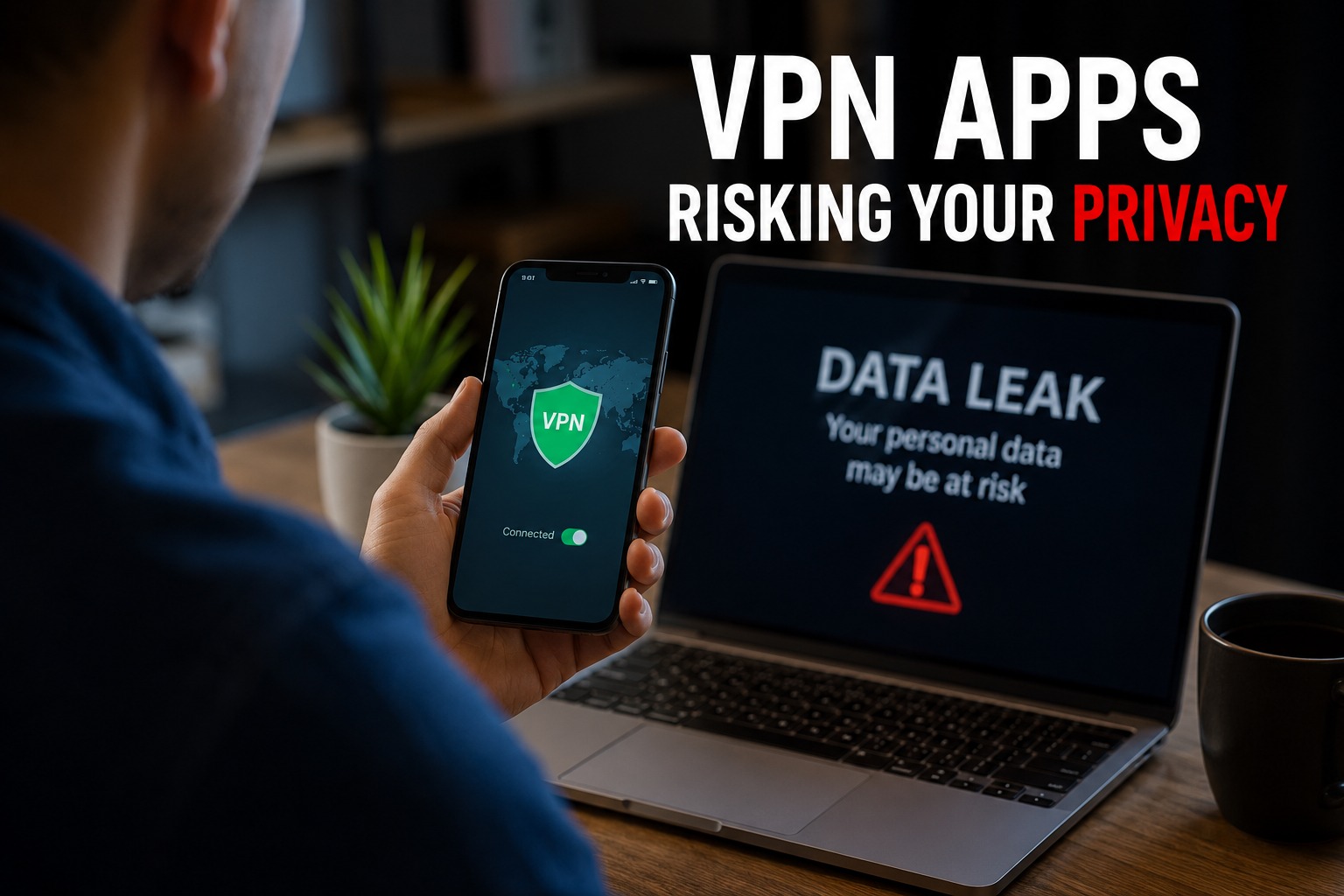
However, a new study from the University of Michigan Engineering suggests that this trust may be misplaced for many Android users. Researchers analyzed 281 popular Android VPN applications and discovered that a significant number failed to meet basic security expectations. Some apps were found leaking sensitive internet data, while others exposed users to privacy risks despite claiming to offer complete protection.
The findings serve as an important reminder that not every VPN app delivers the security it promises. Choosing the wrong VPN could create a false sense of safety while quietly exposing personal information.
What the University of Michigan Research Found
Researchers conducted an extensive analysis of 281 widely used Android VPN applications available to consumers. Instead of focusing only on whether the apps encrypted traffic, the study examined how these VPNs behaved in real-world situations.
The results revealed several concerning issues.
Some VPN apps leaked internet traffic that should have remained encrypted inside the VPN tunnel. Others failed to properly protect Domain Name System (DNS) requests, allowing outsiders to identify which websites users were visiting.
In certain cases, applications requested unnecessary permissions or communicated with third-party services in ways that could compromise user privacy. Some apps also failed to maintain secure connections under changing network conditions, increasing the possibility of accidental data exposure.
Perhaps most worrying, many affected VPNs were popular applications with millions of downloads, meaning the potential impact extends to a very large number of Android users.
Why VPN Data Leaks Are Dangerous
Most people install VPNs expecting complete online anonymity. When a VPN leaks data, however, that protection becomes incomplete.
Imagine connecting to public Wi-Fi at an airport, hotel, or coffee shop. You believe all your internet traffic is encrypted through the VPN, but if DNS requests or network traffic leak outside the encrypted tunnel, attackers or network operators may still gather valuable information.
Even if they cannot read every piece of encrypted content, they may still discover:
- Websites you visit
- Your approximate location
- Your real IP address
- Online behavior patterns
- Device information
For journalists, business professionals, travelers, activists, and privacy-conscious users, such leaks can create significant security risks.
Understanding Common VPN Leaks
Not every VPN leak exposes the same type of information. Several common categories affect user privacy differently.
DNS Leaks
Whenever you visit a website, your device sends a DNS request to translate the domain name into an IP address.
A properly configured VPN routes these requests through its encrypted servers. If DNS requests bypass the VPN, your internet service provider or network administrator can still see which websites you're visiting.
This is known as a DNS leak.
IP Address Leaks
One of the primary reasons people use VPNs is to hide their real IP address.
If the VPN fails during certain network changes or connection interruptions, websites may briefly see the user's original IP address instead of the VPN server.
This defeats one of the VPN's core privacy benefits.
IPv6 Leaks
Some VPN applications protect only IPv4 traffic while ignoring IPv6 connections.
If the device uses IPv6 and the VPN doesn't secure it properly, some internet traffic may bypass encryption entirely.
Traffic Leaks During Network Switching
Modern smartphones frequently switch between Wi-Fi and mobile data.
A poorly designed VPN may temporarily expose traffic during these transitions before re-establishing secure encryption.
Why Some VPN Apps Fail
Building a secure VPN application is far more complicated than simply encrypting internet traffic.
Developers must correctly implement:
- Strong encryption protocols
- Secure DNS handling
- Proper kill switch functionality
- Reliable connection recovery
- Safe certificate validation
- Protection against multiple leak types
Unfortunately, some VPN providers prioritize marketing over engineering. They advertise "military-grade encryption" or "complete anonymity" without investing enough resources into maintaining secure software.
Free VPN services face an additional challenge. Since they generate little or no subscription revenue, some rely on advertising networks or data collection to support their business models.
This creates an obvious conflict between user privacy and company profits.
Why Download Numbers Don't Guarantee Safety
Many users assume that millions of downloads automatically indicate a trustworthy VPN.
Unfortunately, popularity does not equal security.
Some widely downloaded VPN apps achieve their user base through aggressive advertising campaigns, app store optimization, or promotional partnerships rather than independent security evaluations.
Few users have the technical expertise to verify whether a VPN properly encrypts every connection or prevents DNS leaks.
As a result, insecure apps can remain popular for years before researchers identify weaknesses.
How Users Can Choose a Safer VPN
Although the research raises concerns, it does not mean VPN technology itself is unsafe. Instead, it highlights the importance of selecting trustworthy providers.
Before installing a VPN, users should look beyond marketing claims.
A reliable VPN provider typically offers:
- Independent third-party security audits
- A verified no-logs policy
- Modern VPN protocols like WireGuard or OpenVPN
- Regular software updates
- Transparent privacy policies
- Strong reputation within the cybersecurity community
Reading independent reviews from security researchers is often more valuable than relying solely on app store ratings.
Warning Signs of an Untrustworthy VPN
Certain warning signs should make users think twice before installing a VPN application.
Be cautious if a VPN:
- Requests unnecessary permissions.
- Has an unclear privacy policy.
- Promises "100% anonymous forever" without technical details.
- Shows excessive advertisements.
- Has not been updated for a long time.
- Lacks independent security audits.
- Is operated by an unknown company with little public information.
These factors do not automatically prove a VPN is insecure, but they deserve closer examination.
Free VPN vs Paid VPN
The study also renews an ongoing debate between free and paid VPN services.
While some free VPNs are operated by reputable companies, many free services must recover operational costs somehow. Running VPN servers worldwide requires substantial infrastructure and maintenance.
Some free providers finance their services through advertising, analytics, affiliate partnerships, or other business models that may not fully align with user privacy.
Paid VPN providers generally have more sustainable revenue sources, allowing them to invest in security improvements, server infrastructure, and independent audits.
However, users should remember that paying for a VPN does not automatically guarantee superior security. Transparency and technical quality remain far more important than price alone.
What Android Users Should Do Right Now
The research should encourage users to review the VPN applications currently installed on their devices.
Consider checking:
- Whether the VPN receives regular updates.
- If the provider publishes independent security audits.
- Whether leak tests from trusted reviewers show strong protection.
- If the company clearly explains its privacy practices.
- Whether unnecessary permissions have been granted.
If a VPN has a history of security issues or lacks transparency, switching to a better-reviewed provider may be a sensible decision.
Users should also keep Android updated, install apps only from trusted sources, and avoid granting unnecessary permissions.
The Bigger Picture for Mobile Privacy
VPNs remain valuable tools for protecting internet traffic, especially when using public Wi-Fi or traveling. However, they are only one part of a broader cybersecurity strategy.
Strong passwords, multi-factor authentication, encrypted messaging apps, regular software updates, and cautious browsing habits all contribute to better digital security.
The University of Michigan Engineering research demonstrates an important lesson: privacy tools must themselves be trustworthy. Installing a VPN should increase security—not simply create the illusion of protection while allowing sensitive information to leak in the background.
Conclusion
The latest research examining 281 Android VPN applications highlights a critical issue that many users rarely consider. While VPNs are designed to enhance online privacy, not every app fulfills that promise. Data leaks, poor implementation, and weak security practices can undermine the very protection users expect.
Rather than abandoning VPNs altogether, Android users should treat this study as a reminder to choose providers carefully. Independent security audits, transparent privacy policies, frequent updates, and a strong technical reputation matter far more than flashy marketing or download counts.
In today's connected world, digital privacy depends not only on using security tools—but on choosing the right ones. A well-designed VPN can significantly improve online protection, but only when it genuinely delivers the security it advertises.