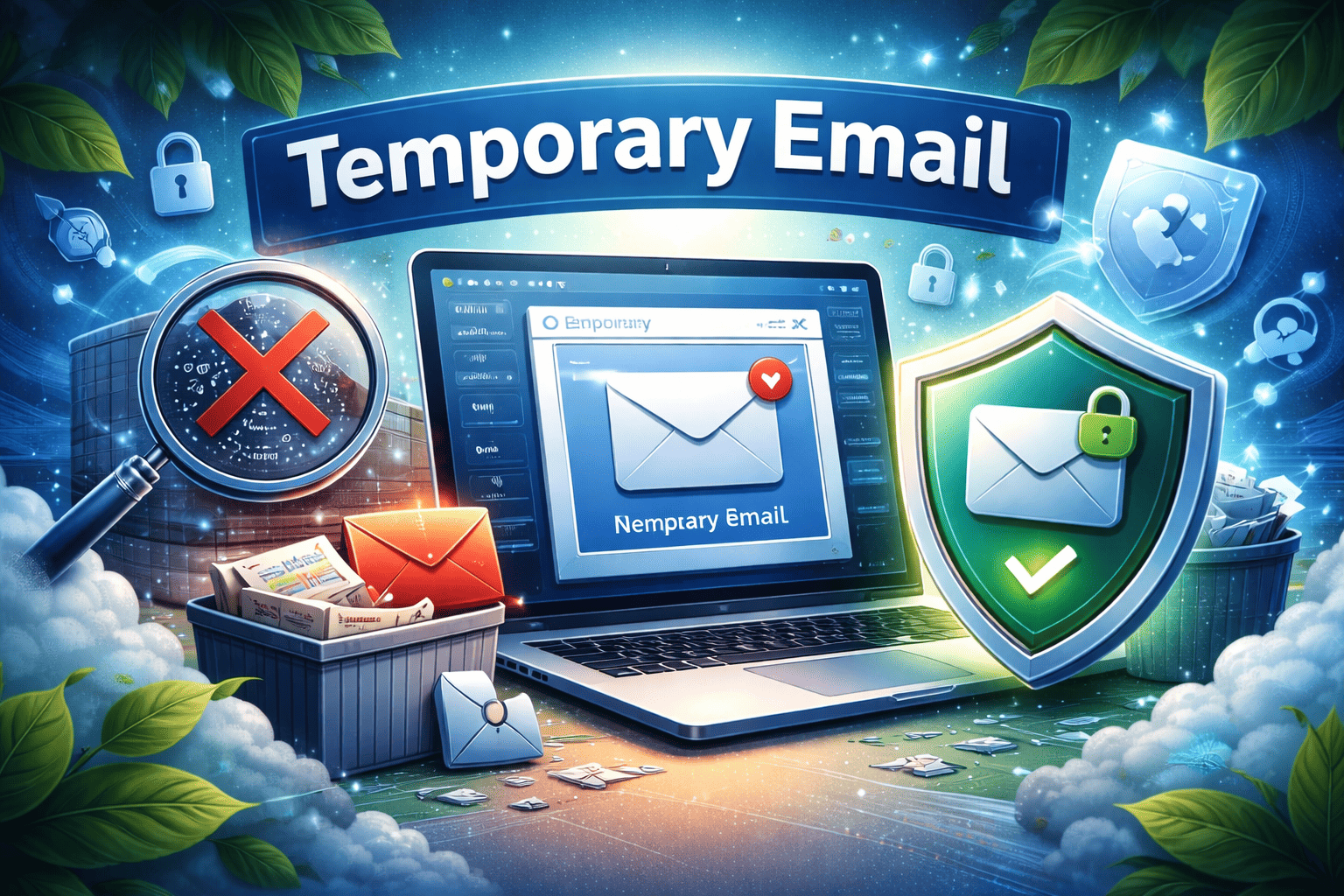
How Temporary Email Protects You from Online Tracking
Every time you sign up for a website, download a free resource, or register for a service, you are usually asked to provide your email address. While this may seem harmless, your email often becomes a key part of how companies track your behavior online. Over time, this can lead to targeted ads, marketing emails, data profiling, and even unwanted data sharing with third parties.
This is where temporary email services become extremely valuable. They provide a simple and effective way to protect your privacy and reduce online tracking. In this guide, you’ll learn how online tracking works and how using a temporary email can help you stay anonymous and secure.
What Is Online Tracking?
Online tracking is the process of collecting information about your behavior on websites, apps, and digital services. Companies track users to understand their interests, habits, and preferences. This information is often used for advertising, analytics, and marketing.
When you use your personal email to sign up for different platforms, it becomes a unique identifier that connects your activities across multiple websites.
Tracking can include:
- Websites you visit
- Products you view or buy
- Services you sign up for
- Emails you open or click
- Your location and device information
Over time, this data creates a detailed profile about you — often without you realizing it.
How Your Email Enables Tracking
Your email address is one of the most powerful tracking tools on the internet. Unlike cookies, which you can delete, your email remains consistent across platforms.
Here’s how companies use your email to track you:
1. Cross-Platform Identification
When you use the same email everywhere, companies can link your accounts across multiple websites. This allows them to build a broader profile of your behavior.
2. Targeted Advertising
Your email is often shared with advertising networks. These networks match your email with browsing data to show highly targeted ads.
3. Data Sharing and Selling
Some platforms share or sell user data to third parties. Your email can become part of marketing lists or data brokerage systems.
4. Email Tracking Pixels
Many promotional emails contain hidden tracking pixels. These tiny images notify senders when you open an email, where you opened it, and sometimes even what device you used.
5. Behavior Profiling
Companies analyze how you interact with emails and websites to predict your interests, buying habits, and preferences.
All of this happens silently in the background.
What Is a Temporary Email?
A temporary email is a disposable email address that you can use for a short period of time. It allows you to receive emails without revealing your real personal email address.
Key characteristics:
- No registration required
- Automatically expires or can be discarded
- Not linked to your identity
- Can be used for one-time signups
Because temporary emails are not tied to your long-term digital identity, they significantly reduce tracking risks.
How Temporary Email Stops Online Tracking
Using a temporary email breaks the connection between your identity and your online activity. Here’s how it protects you:
1. Prevents Profile Building
When you use a different disposable email for signups, companies cannot easily link your actions across platforms. This makes it harder to build a consistent behavioral profile.
2. Blocks Marketing Data Collection
Since temporary emails are short-lived, marketers cannot track long-term engagement or build targeted advertising strategies around you.
3. Reduces Spam Exposure
Many websites sell or share email lists. A temporary email prevents your primary inbox from being added to spam databases.
4. Avoids Email Tracking Pixels
Even if tracking pixels exist, they are connected to a disposable address — not your real identity.
5. Limits Data Brokerage
Data brokers rely on persistent identifiers like permanent email addresses. Temporary emails disrupt this process.
6. Protects Your Personal Inbox
Your real email stays private, clean, and separate from unknown websites.
When You Should Use a Temporary Email
Temporary email is especially useful in situations where privacy matters or long-term communication is unnecessary.
Common use cases include:
- Signing up for free trials
- Downloading resources or eBooks
- Testing online services
- Registering on unfamiliar websites
- Accessing promotional offers
- Avoiding marketing emails
- Protecting identity on public networks
If a website does not require ongoing communication, a temporary email is often the safer choice.
Additional Privacy Benefits
Beyond stopping tracking, temporary email also provides broader digital protection:
Reduced Risk of Data Breaches
If a website gets hacked, your personal email is not exposed.
Protection from Phishing Campaigns
Disposable addresses limit long-term exposure to phishing emails.
Better Control Over Digital Footprint
You decide when and where your real email is used.
Best Practices for Maximum Protection
To get the most privacy benefits, follow these simple tips:
- Use temporary emails for one-time signups
- Avoid using them for banking or important accounts
- Never reuse disposable emails across multiple services
- Combine with strong passwords for better security
- Use your personal email only for trusted platforms
Smart usage ensures maximum privacy without losing important communication.
The Growing Importance of Privacy
As online tracking becomes more advanced, protecting personal data is more important than ever. Many websites collect more information than users realize, and once data is shared, it’s difficult to control how it’s used.
Temporary email offers a simple solution that requires no technical skills. It gives you control over your digital identity and helps you avoid unnecessary data exposure.
Final Thoughts
Your email address is more than just a communication tool — it is a key part of your digital identity. When used across multiple platforms, it enables tracking, profiling, and targeted marketing.
Temporary email services help you break that connection. By using disposable addresses, you can sign up for services safely, reduce tracking, avoid spam, and protect your privacy.
In a world where personal data is constantly collected and analyzed, using temporary email is one of the easiest and most effective steps you can take to stay in control of your online presence.