
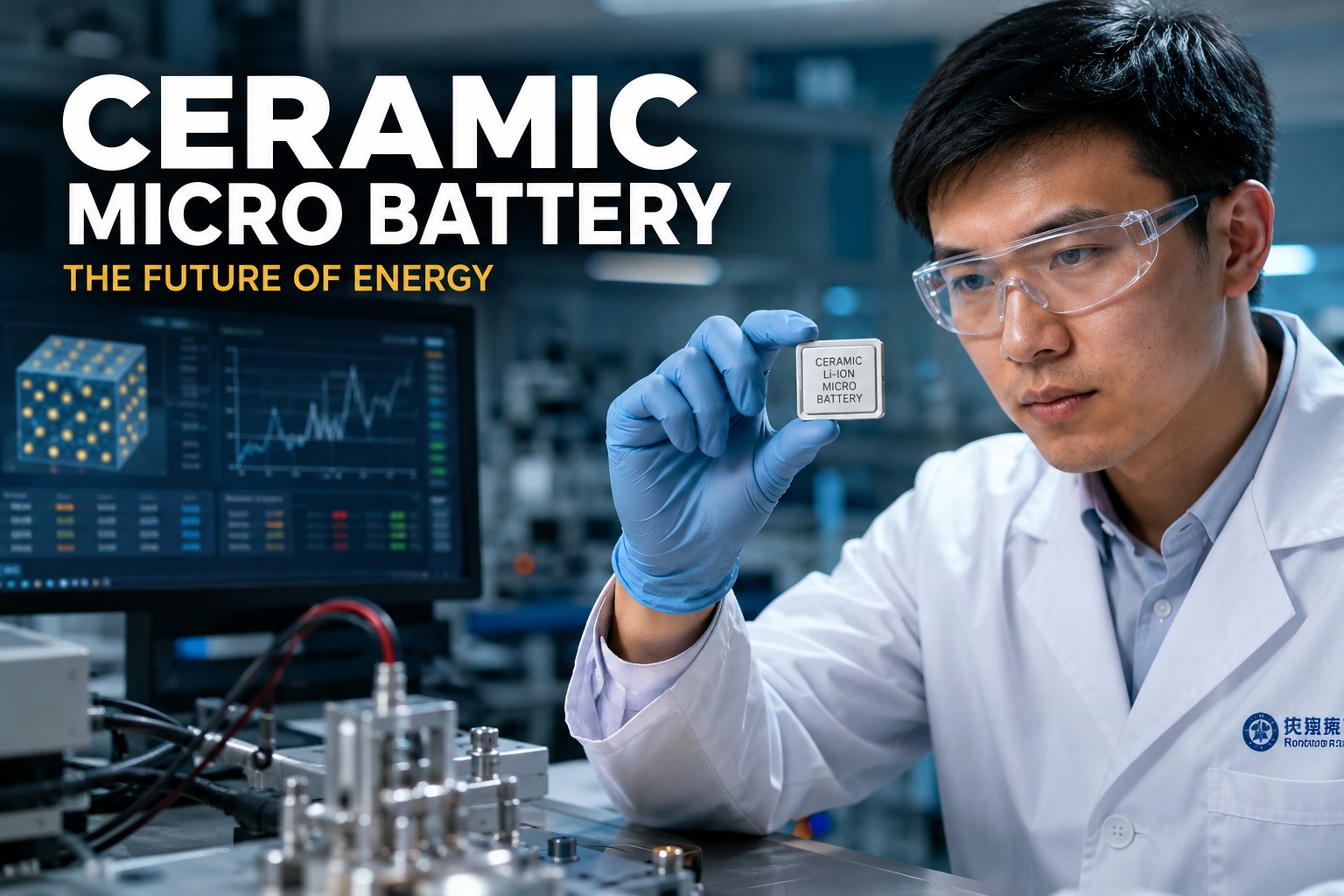
Chinese Scientists Develop Ceramic-Based Lithium-Ion Micro Battery That Can Withstand Extreme Heat
Modern electronic devices are becoming smaller, smarter, and more powerful, but one major challenge continues to limit their performance: battery safety. From smartphones and wearable devices to industrial sensors and electric vehicles, lithium-ion batteries have become the preferred energy source because of their high energy density and long lifespan. However, they also come with a well-known risk—overheating.
Chinese scientists have now introduced a promising solution by developing a ceramic-based lithium-ion micro battery that can safely operate at temperatures as high as 150°C (302°F). This breakthrough could significantly improve the safety and reliability of batteries used in harsh environments where conventional lithium-ion batteries often struggle.
The innovation represents an important step toward the future of energy storage, offering a safer alternative for advanced electronics, industrial equipment, aerospace systems, and next-generation technologies.
A Long-Standing Challenge in Lithium-Ion Battery Technology
Lithium-ion batteries power billions of devices around the world. Their ability to store large amounts of energy in a compact size has made them indispensable in modern life. Despite these advantages, they also have a critical weakness.
Traditional lithium-ion batteries contain a liquid electrolyte, which allows lithium ions to move between the battery's positive and negative electrodes during charging and discharging. While effective, this liquid is typically flammable. If the battery is physically damaged, overcharged, or exposed to extreme heat, the electrolyte can leak or ignite, potentially causing fires or explosions.
This safety concern has driven researchers worldwide to search for alternative battery designs that reduce these risks while maintaining high performance.
What Makes the New Ceramic-Based Battery Different?
The newly developed battery replaces the conventional liquid electrolyte with a solid ceramic electrolyte. This seemingly simple change has significant implications for battery safety and durability.
Ceramic materials are naturally resistant to heat and are chemically stable. Unlike liquid electrolytes, they cannot leak, evaporate, or easily catch fire. As a result, the battery remains stable even under conditions that would be dangerous for traditional lithium-ion batteries.
The ceramic electrolyte still allows lithium ions to move efficiently between the electrodes, enabling the battery to deliver power while dramatically reducing the possibility of thermal failure.
This technology belongs to a broader category known as solid-state batteries, which many experts consider the future of battery development.
Performance at Temperatures Up to 150°C
Perhaps the most remarkable feature of the new battery is its ability to function safely at temperatures reaching 150 degrees Celsius.
Most conventional lithium-ion batteries perform best between approximately 20°C and 45°C. As temperatures rise beyond this range, battery performance declines rapidly, and the risk of thermal runaway increases significantly.
In contrast, the ceramic-based battery maintains structural stability and continues operating efficiently under extreme heat. This opens the door to applications where traditional batteries would either fail or require expensive cooling systems.
Such high-temperature tolerance could prove valuable in industries where equipment is regularly exposed to harsh environmental conditions.
Why Battery Safety Matters More Than Ever
Battery safety has become increasingly important as rechargeable batteries power more aspects of everyday life.
From electric vehicles and smartphones to drones and medical equipment, millions of batteries are used daily. Even though battery failures are relatively rare, incidents involving overheating or fire receive widespread attention because of the potential consequences.
Improving battery safety offers several benefits:
- Lower risk of fire and explosion
- Increased reliability in demanding environments
- Longer operational lifespan
- Reduced maintenance requirements
- Greater consumer confidence in battery-powered technologies
A safer battery also helps manufacturers meet stricter safety standards while reducing warranty claims and replacement costs.
How Ceramic Electrolytes Improve Battery Performance
The ceramic electrolyte serves as the core innovation behind this development.
Unlike liquid electrolytes that can degrade over time, ceramic materials offer excellent mechanical strength and chemical stability. They form a rigid barrier that prevents leakage while still allowing lithium ions to pass through.
This provides multiple performance advantages.
First, ceramic electrolytes reduce the likelihood of short circuits caused by internal damage. Second, they remain stable under high temperatures without breaking down chemically. Third, they help improve long-term battery reliability because they are less vulnerable to aging caused by repeated charging cycles.
Although manufacturing ceramic batteries presents engineering challenges, advances in material science are making large-scale production increasingly practical.
Potential Applications Across Multiple Industries
The ability to withstand extreme heat makes this battery suitable for applications that go far beyond consumer electronics.
Industrial Equipment
Factories often operate machinery in environments where temperatures are considerably higher than normal room conditions. Batteries capable of maintaining stable performance under such conditions can improve productivity and reduce downtime.
Aerospace and Aviation
Aircraft, satellites, and spacecraft frequently experience dramatic temperature fluctuations. Ceramic-based batteries could provide reliable energy storage for onboard electronic systems where safety is absolutely critical.
Automotive Industry
Electric vehicles require batteries that remain safe during rapid charging, long-distance travel, and hot weather conditions. Although this new technology is currently designed as a micro battery, the research could contribute to safer battery systems for future EVs.
Medical Devices
Medical implants and portable healthcare equipment demand highly reliable power sources. Solid-state ceramic batteries could offer improved safety while reducing maintenance concerns.
Internet of Things (IoT)
Billions of connected sensors operate in outdoor environments, factories, and infrastructure projects. Heat-resistant batteries can significantly improve their operational reliability.
The Importance of Micro Batteries
The term micro battery refers to batteries designed for miniature electronic devices rather than large energy storage systems.
As electronics continue becoming smaller, demand for compact, efficient, and safe batteries continues to grow.
Examples include:
- Smartwatches
- Wireless sensors
- Medical implants
- Wearable health monitors
- Miniature robots
- Environmental monitoring devices
For these applications, even small improvements in battery safety and reliability can have a major impact.
How This Compares With Traditional Lithium-Ion Batteries
While both battery types rely on lithium ions to store and release energy, the key difference lies in the electrolyte.
Traditional batteries use flammable liquid electrolytes, making them vulnerable to leakage and overheating. The ceramic-based design replaces this liquid with a solid material that is far more resistant to heat and physical damage.
Although conventional lithium-ion batteries currently remain cheaper and easier to manufacture, ceramic-based batteries offer significant safety advantages that could justify their use in specialized applications.
As manufacturing technologies improve, production costs are expected to decrease, making solid-state batteries increasingly competitive.
Challenges Before Commercial Adoption
Despite its impressive performance, the technology is still in the research and development stage.
Several challenges remain before ceramic batteries become widely available.
Manufacturing ceramic electrolytes with consistent quality requires advanced production techniques. Researchers also need to ensure the batteries deliver competitive energy density, charging speed, and lifespan while remaining affordable.
Scaling laboratory success into mass production is often one of the biggest hurdles in battery innovation.
Nevertheless, progress in materials engineering continues to accelerate, giving experts confidence that commercial applications are becoming more realistic.
What This Means for the Future of Battery Technology
Battery technology is evolving rapidly as demand grows for safer, more efficient energy storage.
Many research groups around the world are working on solid-state batteries because they promise several improvements over conventional lithium-ion technology, including greater safety, longer lifespan, and higher performance.
The development by Chinese scientists demonstrates how advanced ceramic materials may play a central role in this transition.
If future versions can be produced economically at scale, they could influence everything from consumer electronics to transportation and industrial automation.
Rather than replacing conventional batteries overnight, ceramic-based batteries are likely to first appear in specialized applications where safety and heat resistance are essential.
Conclusion
The development of a ceramic-based lithium-ion micro battery capable of operating safely at temperatures up to 150°C marks an important milestone in battery research. By replacing the traditional liquid electrolyte with a solid ceramic material, Chinese scientists have addressed one of the biggest safety concerns associated with lithium-ion batteries—fire risk caused by overheating or electrolyte leakage.
Although the technology is still progressing toward large-scale commercialization, its potential applications are extensive. From industrial machinery and aerospace systems to medical devices and miniature electronics, heat-resistant solid-state batteries could redefine how energy is stored and used in demanding environments.
As research continues and manufacturing techniques improve, ceramic-based battery technology may become one of the key innovations shaping the next generation of safe, reliable, and high-performance energy storage systems.