
Microplastics Found Thousands of Meters Below the Ocean Surface: A Wake-Up Call for the Planet
Introduction
For years, scientists believed that the deepest parts of the ocean remained largely untouched by human pollution. These remote ecosystems, hidden thousands of meters beneath the surface and beyond the reach of sunlight, were considered some of the last pristine environments on Earth. However, new scientific research has shattered that assumption.
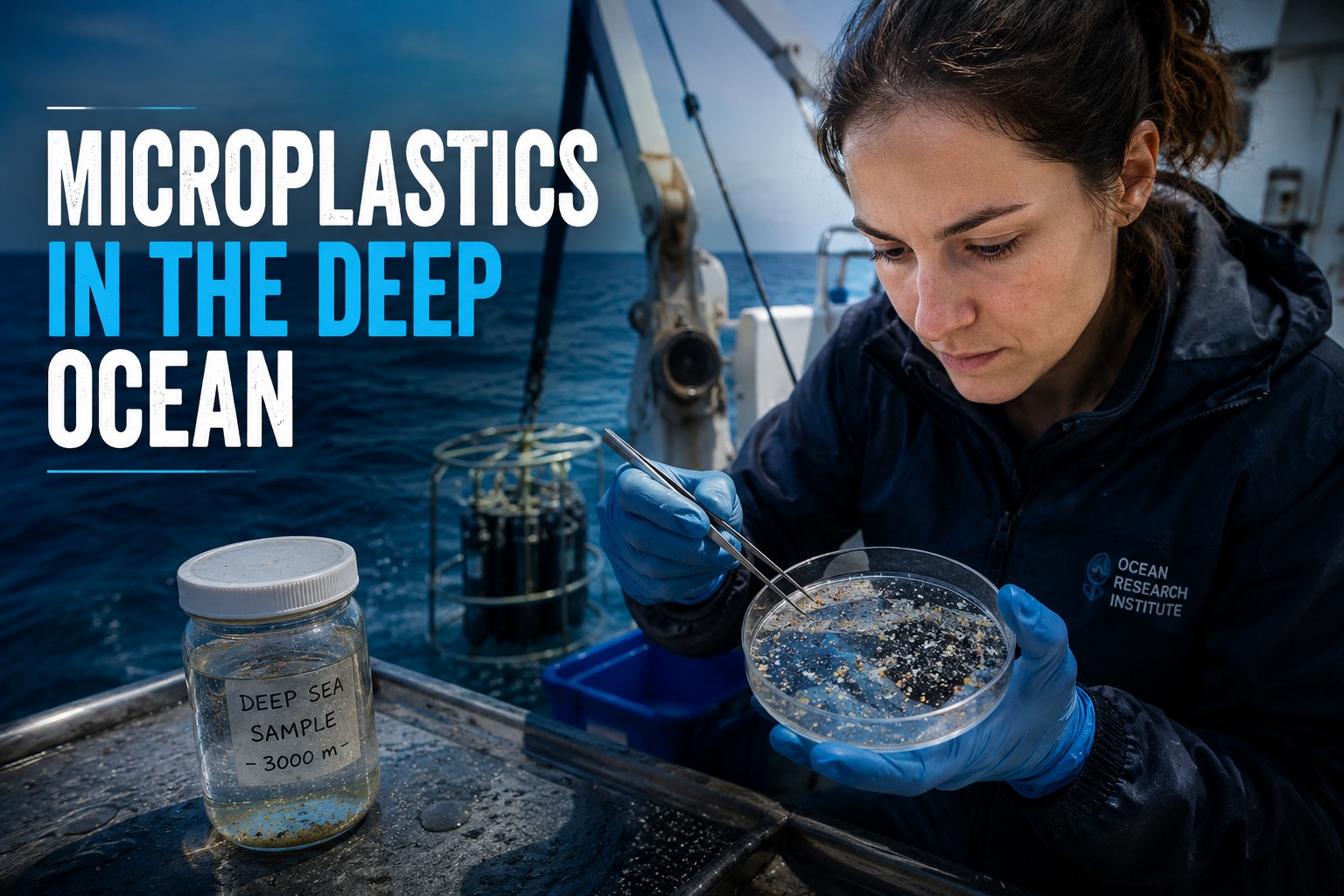
Researchers have now confirmed that microplastics have reached deep-sea ecosystems located thousands of meters below the ocean's surface, proving that plastic pollution is no longer limited to beaches, rivers, or surface waters. This discovery highlights the extraordinary reach of human-made waste and raises serious concerns about the future of marine biodiversity and the health of the global ocean.
With more than 11 million metric tons of plastic entering the oceans every year, the world's plastic crisis is expanding far beyond what most people imagine. As larger plastic items break down into tiny fragments known as microplastics, they travel through ocean currents, sink into the deep sea, and become part of ecosystems that have evolved in complete darkness for millions of years.
This finding is not merely another environmental headline—it is a powerful reminder that no corner of the planet remains isolated from human activity.
What Are Microplastics?
Microplastics are tiny plastic particles measuring less than five millimeters in diameter. They originate from two primary sources.
The first source consists of primary microplastics, which are manufactured intentionally for products such as cosmetics, industrial abrasives, and synthetic fibers.
The second source is secondary microplastics, formed when larger plastic items—including bottles, bags, fishing gear, food packaging, and disposable containers—gradually break apart due to sunlight, waves, heat, and physical wear.
Unlike organic materials, plastic does not truly biodegrade. Instead, it fragments into increasingly smaller particles, eventually becoming microscopic pieces that are nearly impossible to remove from the environment.
These particles have now been detected in oceans, freshwater systems, Arctic ice, mountain snow, rainfall, agricultural soil, wildlife, and even the human body.
How Do Microplastics Reach the Deep Ocean?
At first glance, it may seem surprising that plastic particles can travel several kilometers beneath the ocean surface. However, the ocean is a highly connected system where water continuously circulates through complex currents.
Microplastics begin their journey in rivers, stormwater drains, coastal cities, and shipping routes before entering the sea. Once there, several natural processes transport them downward.
Some particles attach themselves to marine snow—a continuous shower of organic material including dead plankton, algae, and biological waste. As this material sinks, it carries microplastics toward the ocean floor.
Other particles become trapped inside marine organisms. When these animals die, their bodies descend into the deep sea, transporting embedded plastic with them.
Ocean currents, underwater landslides, and sediment movement further distribute these particles across vast distances. Over time, even the deepest ocean trenches accumulate plastic pollution.
This explains why researchers are increasingly finding microplastics in places that humans rarely visit.
The New Scientific Discovery
Recent studies have revealed microplastics in deep-sea ecosystems thousands of meters below sea level, including regions where sunlight never penetrates.
These dark environments are home to unique species specially adapted to high pressure, freezing temperatures, and limited food supplies. Because these habitats evolved in isolation over millions of years, scientists once assumed they remained relatively untouched by modern pollution.
Instead, researchers discovered plastic fibers and microscopic fragments embedded within deep-sea sediments and inside marine organisms.
The discovery demonstrates that plastic pollution has become a truly global environmental issue. From crowded coastlines to the deepest parts of the ocean, human waste is now present almost everywhere scientists look.
This finding changes our understanding of marine pollution and suggests that plastic contamination is far more widespread than previously believed.
Why Deep-Sea Ecosystems Matter
Although hidden from view, the deep ocean performs essential functions that help regulate life on Earth.
It stores enormous amounts of carbon dioxide, helping moderate the global climate. It recycles nutrients that support marine food webs and provides habitat for countless species that remain poorly understood.
Many deep-sea organisms grow slowly, reproduce infrequently, and live for decades or even centuries. This makes them particularly vulnerable to environmental disturbances.
Unlike coastal ecosystems, recovery in the deep sea can take hundreds or even thousands of years.
Introducing microplastics into these fragile habitats may disrupt biological processes that scientists are only beginning to understand.
Protecting the deep ocean is therefore not only about preserving biodiversity—it is also about maintaining the stability of Earth's environmental systems.
How Microplastics Affect Marine Life
Microplastics pose several risks to marine organisms.
Many fish, crustaceans, shellfish, worms, and plankton mistake plastic particles for food. Because these fragments often resemble tiny prey, animals ingest them accidentally.
Once consumed, microplastics may block digestive systems, reduce feeding efficiency, and create a false feeling of fullness. Animals may eat less nutritious food, resulting in slower growth and reduced survival.
Plastic particles can also carry harmful chemicals, including pesticides, heavy metals, and persistent organic pollutants. These substances may accumulate inside animals and potentially move through the marine food chain.
Scientists have also observed physical damage caused by sharp plastic fragments, along with inflammation and stress responses in various marine species.
Although researchers continue studying the long-term effects, evidence increasingly suggests that microplastics influence both individual organisms and entire ecosystems.
Could Humans Be Affected?
The discovery of microplastics in the deepest ocean raises important questions about human health.
People are exposed to microplastics through seafood, drinking water, packaged food, household dust, and even the air they breathe.
Recent scientific studies have detected microscopic plastic particles in human blood, lungs, and other tissues. However, researchers are still investigating the long-term health implications.
While current evidence does not fully explain the risks, scientists emphasize that reducing plastic pollution remains the safest approach.
Healthy oceans support healthy fisheries, cleaner water, stable climates, and global food security. Therefore, protecting marine ecosystems ultimately benefits human society as well.
Why Plastic Pollution Continues to Grow
Global plastic production has increased dramatically over the past several decades because plastic is inexpensive, lightweight, and versatile.
Unfortunately, waste management systems have struggled to keep pace.
Single-use plastics—including shopping bags, food wrappers, disposable cups, and packaging materials—represent a major source of environmental pollution.
In many regions, inadequate recycling infrastructure allows plastic waste to enter rivers before eventually reaching the ocean.
Fishing equipment, abandoned nets, industrial waste, and shipping activities also contribute significantly to marine plastic pollution.
As plastics continue to accumulate faster than they can be removed, even remote ecosystems become contaminated.
What Can Be Done?
Although the problem is complex, meaningful solutions already exist.
Governments can strengthen waste management systems, improve recycling infrastructure, and introduce policies that reduce unnecessary single-use plastics.
Businesses can redesign packaging, develop biodegradable alternatives where appropriate, and adopt circular economy principles that keep materials in use longer.
Scientists continue developing innovative technologies to detect, monitor, and remove plastic pollution before it spreads further into marine environments.
Individuals also play an important role. Small daily choices can collectively make a significant difference.
Simple actions include:
- Reducing the use of single-use plastic products.
- Choosing reusable bottles, shopping bags, and food containers.
- Recycling correctly according to local guidelines.
- Supporting companies committed to sustainable packaging.
- Participating in community clean-up campaigns.
No single solution will eliminate microplastics overnight, but combined efforts can dramatically reduce future pollution.
The Bigger Picture
The discovery of microplastics in deep-sea ecosystems reminds us that Earth's natural systems are deeply interconnected.
A plastic bottle discarded on land today may eventually fragment into microscopic particles that travel across oceans and settle thousands of meters below the surface decades later.
This journey illustrates how everyday human activities can have consequences far beyond their original location.
The deep ocean was once considered one of the planet's last untouched frontiers. Finding plastic pollution there demonstrates that environmental responsibility must extend beyond visible landscapes.
Protecting oceans is not simply about conserving wildlife—it is about safeguarding climate regulation, biodiversity, food security, and the health of future generations.
Conclusion
The confirmation that microplastics have reached deep-sea ecosystems thousands of meters below the ocean surface represents one of the clearest signs yet of the global scale of plastic pollution. These remote habitats, once believed to be protected by their isolation, are now showing evidence of contamination from human activity.
With more than 11 million metric tons of plastic entering the oceans annually, the urgency for action has never been greater. Reducing plastic waste, improving recycling systems, encouraging sustainable innovation, and promoting responsible consumption are essential steps toward protecting marine ecosystems.
The ocean connects every continent and influences every aspect of life on Earth. What happens on our streets, in our cities, and along our coastlines eventually reaches even the deepest waters. The latest scientific findings serve as both a warning and an opportunity—reminding us that the choices we make today will shape the health of our oceans for generations to come.